Valentine’s Day is all about love. As a business owner, you probably love your company and want customers to love it, too.
The good news is you don’t need Cupid’s arrow to get people to fall in love with your business. You just need to create positive customer experiences that make people want to return to your brand.

The Year-Round Holiday Marketing Game Plan
Get a year’s worth of ready-to-use campaigns, slogans, and email templates so you can market every holiday — without the last-minute scramble.
Download
This post will walk you through the best Valentine’s Day marketing ideas for small businesses. We’ll provide examples and help you create a campaign that drives customers back to your business.
Valentine’s Day Marketing Ideas for Small Businesses
Here are 19 Valentine’s Day marketing ideas you and your customers will love.
1. Start Early — and Make It More Than Just 24 Hours
Valentine’s Day no longer lives on February 14 alone. Today, it shows up in browsing behavior weeks in advance — as customers look for ideas, compare prices, and decide who they’re buying for long before they click “add to cart.” Waiting until the week of Valentine’s Day to launch a promotion means you’re already late.
The brands that win, treat Valentine’s Day as a season, not a single sales moment. They warm audiences up early with sneak peeks, gift guides, and curated collections that help shoppers plan ahead — while still leaving room for last-minute buyers who need a quick win. Teasing what’s coming builds anticipation, keeps your business top-of-mind, and gives customers multiple chances to engage instead of one rushed decision.
A dedicated Valentine’s landing page brings it all together. It becomes a single destination where shoppers can explore ideas, see deadlines, and get inspired — while also helping your business show up in search results for seasonal queries like “Valentine’s gift ideas near me” or “unique Valentine’s gifts for friends and pets.”
Pro tip: Add a Valentine’s landing page on your website with SEO-optimized copy like “2026 Valentine’s gift ideas for friends, pets, coworkers, and lovers”.
2. Think Beyond Romance
For many consumers, Valentine’s Day isn’t just about couples — it’s about connection. Shoppers are celebrating friendships, coworkers, family members, pets, and themselves just as much as romantic partners. When marketing only speaks to couples, it leaves money on the table.
People now buy gifts for Galentine’s Day, friends, family, pets, and even themselves. Your marketing should reflect that broader audience:
- Galentine’s bundles: bestie mugs, friendship bracelets, matching tees.
- Pet-centric Valentine’s gifts: heart bandanas, custom pet tags, gift boxes for furry companions.
- Workplace gifting packages: desk accessories, coffee sets, mugs or treats for teams.
By acknowledging these moments in your messaging, your business feels more inclusive and more relevant. Suddenly, Valentine’s Day isn’t a niche holiday — it’s a flexible opportunity that fits many lifestyles. Expanding who Valentine’s Day is “for” naturally expands who your business can target.
3. Leverage AI & Personalization
Valentine’s Day shopping is emotional — and emotional purchases demand relevance. Generic promotions that treat every customer the same don’t resonate the way they used to. Customers expect brands to understand why they’re shopping, not just when.
AI-powered tools make that possible, even for small businesses. By looking at past purchases, interests, or engagement behavior, you can tailor messages that feel thoughtful instead of salesy. A customer buying for themselves should see something very different from someone shopping for a partner or a pet — and when that happens, conversion rates follow.
Interactive experiences take personalization one step further. Gift finders and quizzes don’t just recommend products — they reduce decision fatigue. They help customers feel confident in their choice, which is especially valuable during a busy holiday. When people feel understood, they’re more likely to buy — and more likely to come back.
4. Optimize Seasonal SEO + AI Search Visibility
Valentine’s Day discovery often happens before a customer ever visits a website — sometimes before they even know which business they’re looking for. AI-powered search, voice assistants, and generative results now play a major role in how people find answers like “Where can I get a last-minute Valentine’s gift near me?” or “Who offers Valentine’s specials this week?”
That means your seasonal marketing can’t live only on social posts or email promotions. It also has to live in the places where AI and search engines pull their answers. When your website includes clear seasonal signals — like structured Valentine’s metadata, timely FAQs, and updated service or delivery details — it becomes easier for those systems to understand, surface, and recommend your business at the exact moment customers are ready to act.
Local listings matter just as much. A customer asking a voice assistant for a Valentine’s deal nearby won’t scroll through pages of results — they’ll hear one or two options. Businesses that update their listings with Valentine’s hours, promotions, and descriptions are the ones that show up in those high-intent moments. Seasonal SEO isn’t about chasing trends; it’s about making sure your business is visible when love — or panic — strikes.
5. Run Inclusive Campaigns (Not Just “Couple-Only”)
Valentine’s Day has changed. For many people, it’s no longer a romantic milestone — it’s a cultural moment. Some customers celebrate friendship. Others lean into self-care. Some actively avoid the holiday altogether. When marketing only focuses on couples, it risks feeling outdated — or worse, exclusionary.
Inclusive Valentine’s campaigns acknowledge that love shows up in many forms. Singles may be looking for a reason to indulge. Friends may be planning a night out or a shared experience. Even anti-Valentine’s shoppers often want something playful, humorous, or cathartic. When your messaging makes room for all of those perspectives, it feels more human and more relatable.
Storytelling is especially powerful here. Highlighting real customers — a group of friends celebrating Galentine’s, a small business owner gifting their team, someone choosing themselves this Valentine’s Day — shifts the narrative from who Valentine’s Day is for to how people actually celebrate it. That authenticity builds goodwill, strengthens brand trust, and invites more people into the conversation.
Inclusive campaigns don’t dilute your message — they expand it. And in a crowded holiday landscape, that broader emotional connection can be what sets your business apart.
6. Market your products or services as a gift.
If you’re creating a marketing campaign for Valentine’s Day, you should promote your products and services as a gift that customers can give to others. Valentine’s Day is a retail holiday, meaning people want to buy something for someone they care about.
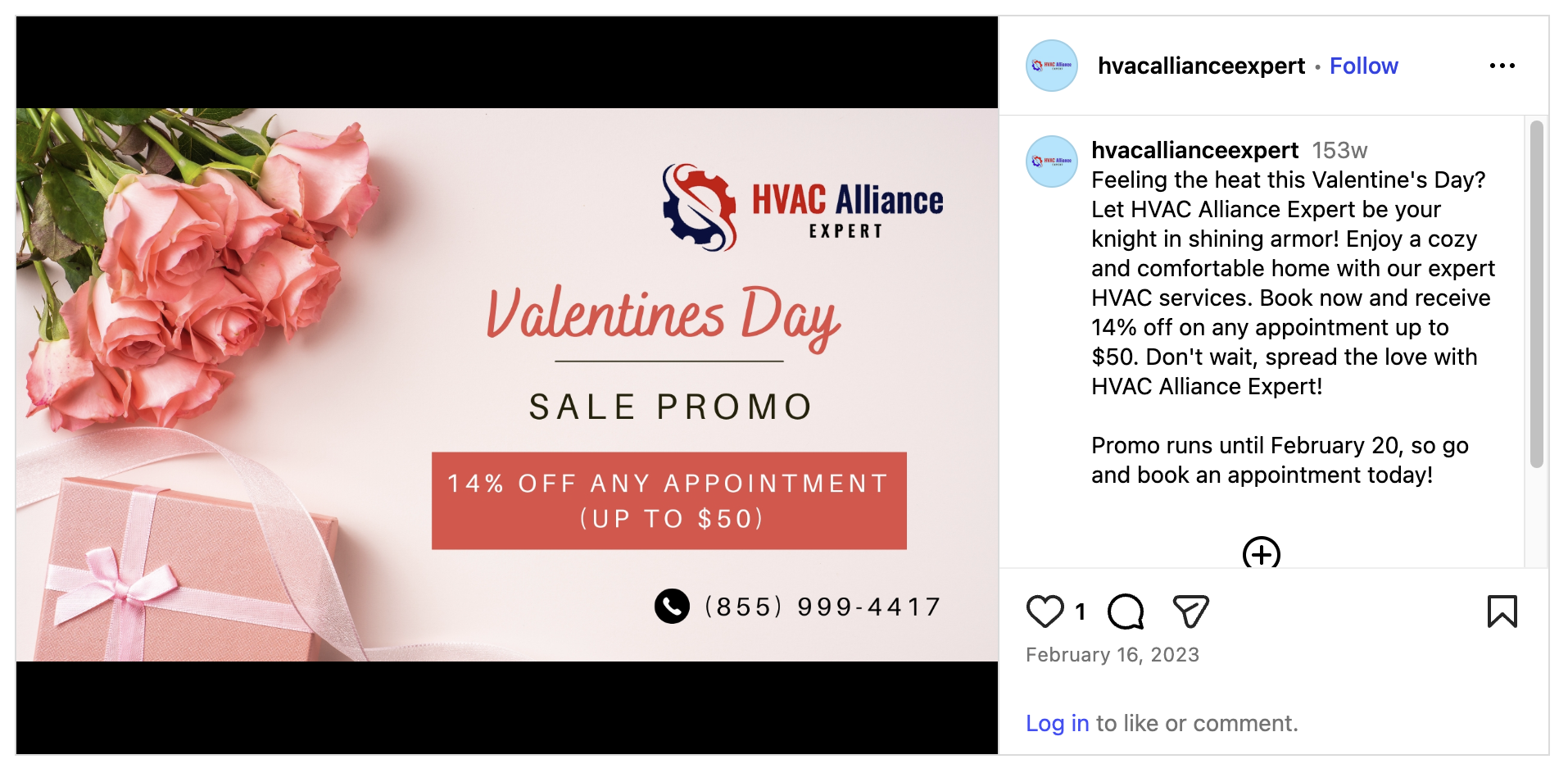
If you’re a service-based business, like a plumber or an HVAC company, this is a really effective way to market your services. You’ll stand out from brands selling flowers and candy and position yourself as an alternative to traditional Valentine’s Day gifts.
For example, this HVAC brand offers a 14% discount and promises to be your “knight in shining armor” this Valentine’s Day.
7. Host a Valentine’s Day event.
Valentine’s Day is a popular time for hosting events. People want to go out and celebrate with their significant other or friends. Your business can extend its hours and offer a special Valentine’s Day event to generate quick revenue.
Think about your industry and how to turn it into a fun, interactive event. For example, if you’re a landscaping company, host a workshop that teaches people how to arrange flowers into bouquets. Contractors can teach woodworking and help couples design romantic decor for their homes. These activities should be hands-on and require some teamwork to encourage conversation and collaboration.
You can also advertise to singles. This is another opportunity to celebrate “Galentine’s Day” targeting women who want to spend the holiday with their friends. These events are popular because they include people who may not have a significant other to celebrate with or have a different perspective on Valentine’s Day.
8. Add a match-making quiz to your website.
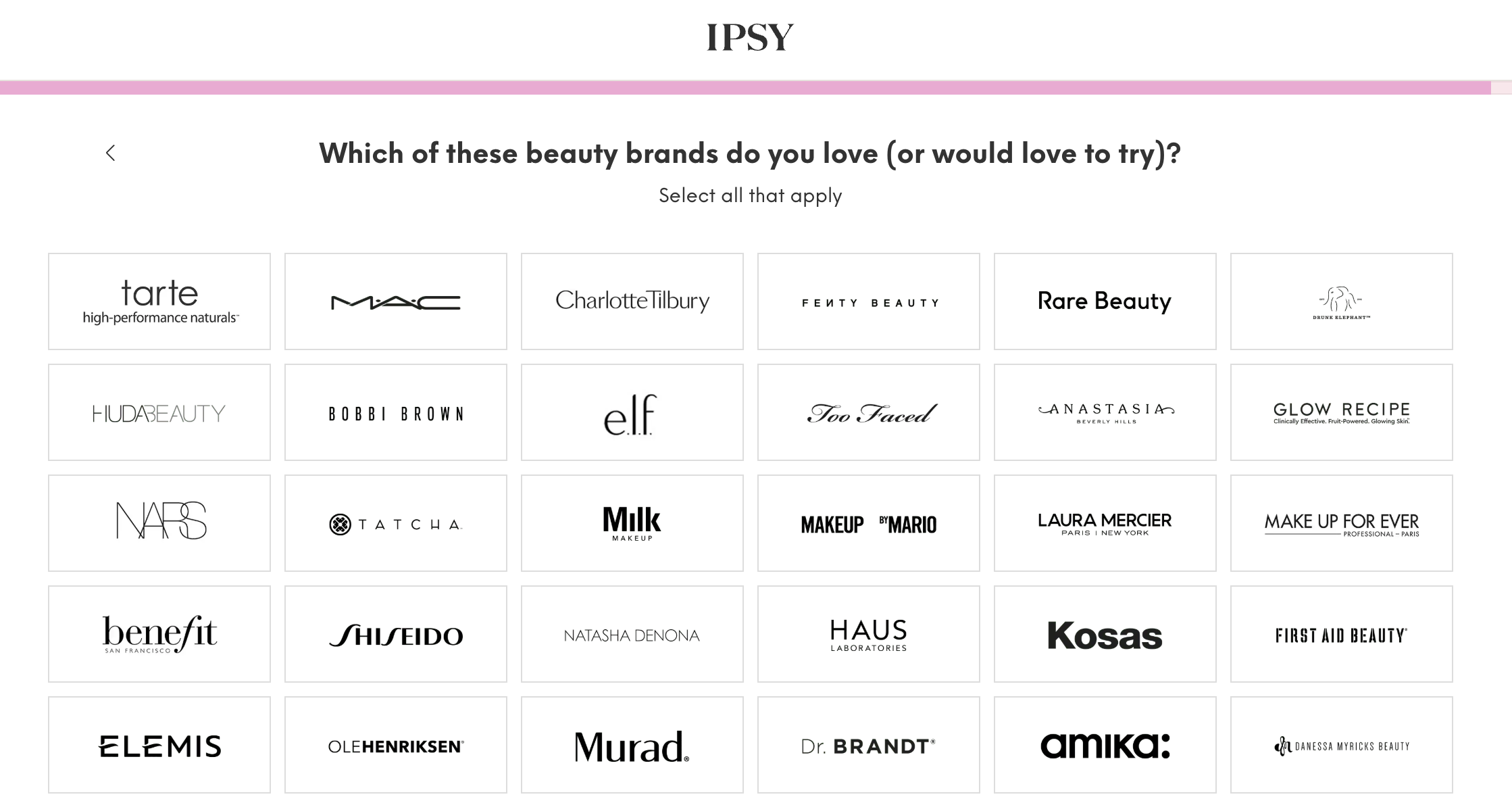
Your website is one of the best places to generate customer engagement. One Valentine’s Day idea is adding a match-making quiz to your website. But, rather than pairing customers with the person of their dreams, your quiz will tell them what products or services they’ll like best. It’s a fun, light-hearted way to make your website more interactive.
This quiz is from IPSY, a subscription-based makeup brand. After answering a few questions about your makeup preferences, IPSY sends you a box of products based on your profile. Each box is personalized, so you feel like you’re getting a package designed specifically for you.
9. Give out a Valentine’s Day gift.
Small gifts are effective for customer appreciation. It could be a coupon for your store or a free consultation on a project. Giving away something for free shows customers that you value their business and gives people a reason to come back to your brand.
Here’s an example from an eyelash technician who gave away goodie bags on Valentine’s Day. It’s a small token, but it improves customer relationships. In the beauty industry, this works because it also helps stylists show off their expertise by introducing new products to customers and showing how best to use them.
@chiclashesla A little something as always from me to you. 💗 #valentinesday #valentinesdaygift #mygirls #client #appreciationpost ♬ FEEL THE GROOVE – Queens Road, Fabian Graetz
10. Sell a limited-time product or service.
Another way to take advantage of Valentine’s Day is to sell a limited-time product or service. These offers are only available near the holiday, which encourages people to buy before the deal is gone.
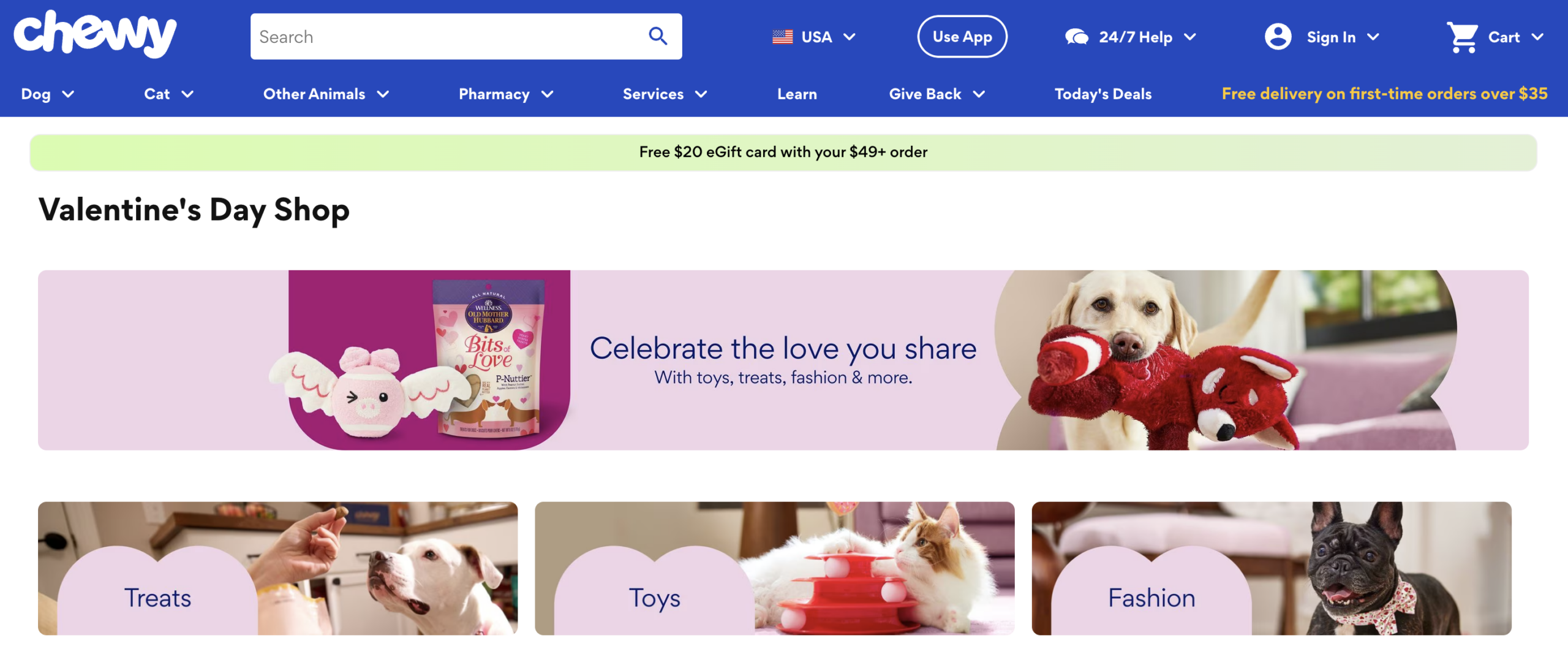
For example, pet stores often change their products based on upcoming holidays. Chewy, for instance, sells a line of Valentine-themed gifts for pets like heart-shaped treats and plush toys. These products are only available for a limited time, and they capitalize on different themes related to the holiday.
11. Run an anti-Valentine’s Day campaign.
Some people aren’t the biggest fans of Valentine’s Day. They may feel left out or don’t believe in celebrating it. To make them feel more included, brands have started “anti-Valentine’s Day” campaigns like this one that focus on travel instead of love.
Another idea is to run a “breakup campaign” that targets customers who shop with other brands. Give them a reason to “break up” with your competitors, like sharing an exclusive discount or a free product giveaway. Here’s an example from a bank in Australia that “broke up” with its competitors.

The letter discusses how this bank no longer charges fees, offers better interest rates, and supports local businesses, unlike its competitors. This clever marketing campaign differentiates this brand from other banks and gives customers a clear reason to switch.
12. Partner with other businesses.
Valentine’s Day is a great time to announce a partnership with another business. You can share how you found each other and explain why it’s a perfect match for your customers.
For instance, here’s a partnership between a senior-living agency and a restaurant corporation. They teamed up to launch the “Delivering Delicious” program, which delivers food to senior-living communities.
This idea works because it pairs two brands with a similar target audience. There’s a clear value to customers, and it benefits both the living communities and the restaurant chains.
13. Offer group deals.
Group deals are beneficial because they attract multiple people who are interested in finding deals and might not have otherwise known about your brand in your brand.
Valentine’s Day group deals are popular because people want something to do. For example, if you manage a gym, you could host a fitness class and offer a deal to people who sign up with friends or loved ones. This strategy encourages referrals, which is very effective for bringing in new customers.
Here’s an example from a fitness studio advertising a buy-one-get-one deal. If you bring a friend or date to class, they can attend for free. That encourages their members to sign up and grows brand awareness.
14. Start a contest or giveaway on social media.
You can also increase customer engagement on social media by promoting a contest or giveaway. Consider giving away a free product or service or buying a prize instead. Just make sure whatever you offer is enticing enough to get people to click on your post or share your content.
For example, here’s a social media giveaway hosted by a custom printing company. To enter, customers must comment on the post, and they’ll have a chance to win the “Valentine’s Day Prize Pack,” which includes collages, pop art, and canvas prints.
If you’re going to host a Valentine’s Day contest, make sure you have a clear goal in mind. Do you want customers to comment on your post, visit your website, or share your content on their social media channels? Establishing this ahead of time will help you create a simple and engaging contest that helps you meet your marketing goals.
15. Bundle products or services together.
You can embrace the spirit of match-making by bundling your products or services into one exclusive offer. Bundling helps you sell more products and offers more value to your customers. It’s an effective marketing strategy, especially if you sell products that complement each other.
16. Record a promotional video.
One way to grab your customers’ attention is to create a promotional video that advertises an offer or your business. Video marketing is incredibly effective; in fact, 96% of marketers say it’s helped them increase brand awareness. Brands that don’t use video typically don’t know where to start. But, it’s actually much easier than you think to create a high-quality commercial using free production tools and AI assistants.
Short-form video (Reels, TikTok) and influencer/cultural partnerships are essential — especially for Gen Z audiences who respond better to personalities than traditional ads.
- Showcase real gifting moments and UGC.
- Partner with creators who align with your brand.
- Turn promotional posts into stories — not just product pitches.
Video increases engagement and purchase intent more than static posts.
Tip: VEED is my go-to video production tool. It’s free, easy to use, and great for creating short videos to promote your brand.
Here’s a laugh-out-loud Valentine’s Day commercial for a small bakery in Missouri.
17. Create a promo code for your website.
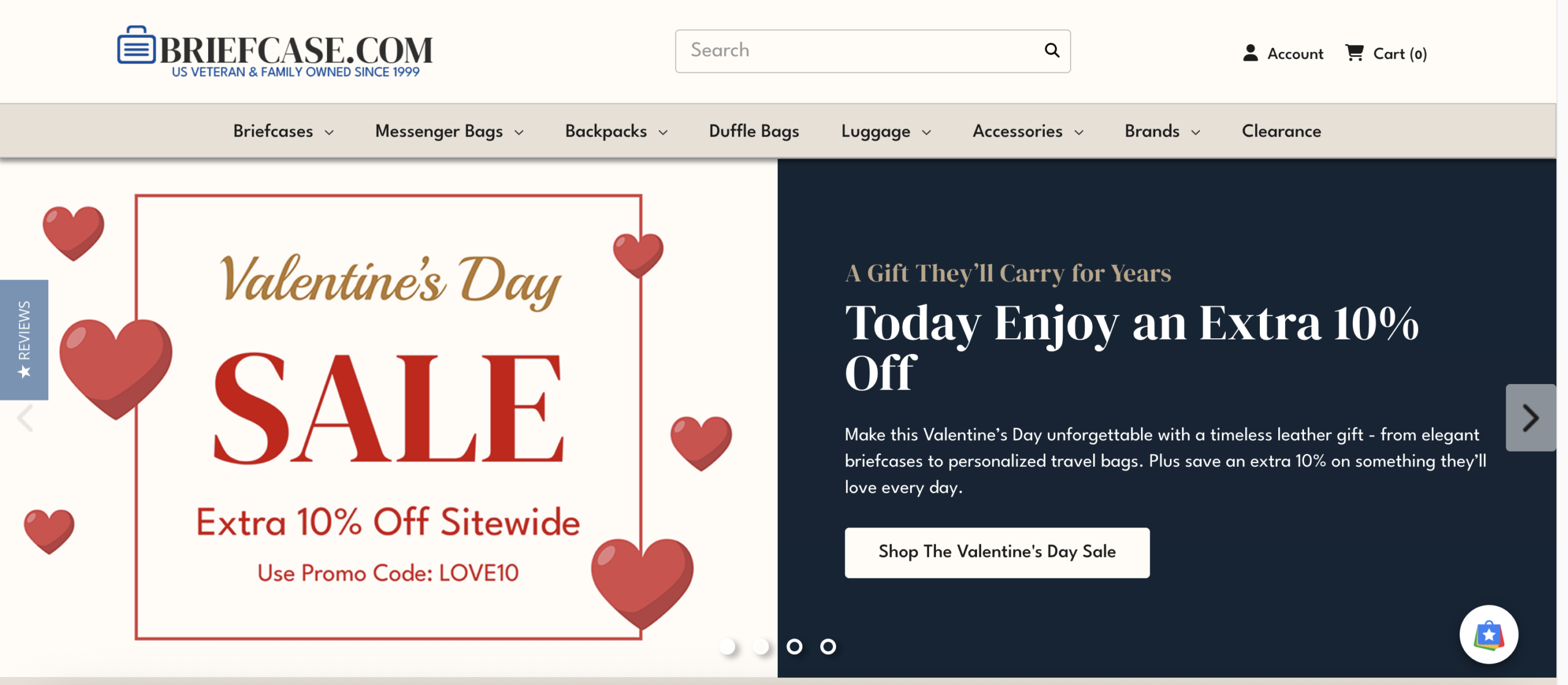
If you want to generate more traffic to your website or online store, you can create a promo code for Valentine’s Day. Promo codes are exclusive discounts that encourage customers to buy from your brand. You can send them via email or advertise them on your website.
For example, here’s a promo code that Briefcase.com gave me. Notice that this offer also has a deadline. I have to redeem it today if I want an additional 15% off. That motivates me to act quickly so I can take advantage of this deal.
18. Send your customers thank-you notes.
Remember in elementary school when you gave your classmates Valentine’s Day grams? Those festive little notes aren’t just a way to tell your crush you like them; they’re also great for networking with customers.
These days, hand-written notes mean a lot. It shows you took the time and effort to write a thoughtful message and send it to your customers. Use this strategy on Valentine’s Day to thank customers for their business. It’s a small gesture, but it keeps your brand top of mind and builds a positive reputation for your business.
If you don’t have the time or resources to mail your customers a thank-you note, consider using email instead. It’s not as personal as a hand-written note, but you can customize your message to include your customer’s name, location, and recently purchased products.
19. Track Engagement — Then Retarget Post-Holiday
Valentine’s Day shouldn’t be a one-off. Use customer data to:
- follow up with thank-you offers
- invite newsletter subscribers back for spring promotions
- retarget segments who browsed but didn’t buy
This extends the value of your Valentine’s marketing into year-round revenue.
Campaigns Your Customers Will Love
Like any other holiday, Valentine’s Day is an opportunity to promote your business. Try a few of these marketing strategies and see which ones your customers respond to most. Pairing a few of these together will help you create an effective marketing campaign that attracts new customers and creates a positive brand experience.