Simplifying your business.

 One software for all of your locations.

 Earn cash by referring businesses to us.



For years, small businesses were told the same thing: Build a great website, and customers will come. However, today’s customer journey looks very different. Many customers discover, evaluate, and even decide on a business without ever visiting its website. They read reviews in Google search results. They compare ratings in local listings. They browse social media profiles. They check photos, hours, and responses to comments.
In other words, your website is no longer the center of your online presence. It’s one piece of a much larger ecosystem. This shift requires a new mindset – one focused on marketing visibility across discovery channels, not just homepage traffic. Instead of designing a single destination, small businesses now need to design a distributed presence that shows up consistently wherever customers are looking.
The Shift: How Customers Discover Local Businesses Today
When customers need a service, they don’t start by typing in a direct website URL.
Instead, they:
- Search on Google and view business listings
- Ask AI for a business recommendation
- Read reviews before clicking anything
- Browse Google Business Profiles for photos and hours
- Scroll social media for recommendations
- Compare businesses in directory listings
- Look at map results for proximity and ratings
Often, the decision happens before a website visit. In many cases, customers never click through at all. They call directly from a listing, message via social media, or book through an integrated scheduling tool. That means your first impression might not be your homepage.
It might be:
- Your Google rating
- Your most recent review
- Your business description in a directory
- Your response time to a message
- The quality of your photos
This is why off-site marketing for small businesses is no longer optional. It’s foundational.
Off-Site Marketing for Small Businesses
1. Local business listings.
2. Online reviews and reputation platforms.
3. Social media profiles.
4. Map results and “near me” searches.
5. Messaging and communication channels.
6. AI recommendations and conversational search.
1. Local business listings.
Local listings are often the first point of contact between your business and potential customers.
These include:
- Google Business Profile
- Bing Places
- Apple Maps
- Yelp
- Industry-specific directories (home services, legal, medical listing platforms, etc.)
- Local chamber or association directories
Listings display your:
- Business name
- Address
- Phone number
- Hours
- Reviews
- Photos
- Service categories
If this information is outdated or inconsistent, customers lose trust immediately. Strong local business listings management ensures that your business appears accurate and professional everywhere it’s listed. Consistency across platforms improves credibility and supports SEO by reinforcing trust signals across the web.
Instead of relying solely on website traffic, optimized listings let customers contact you directly from search results, boosting marketing visibility without requiring a homepage visit.
Being present and optimized on niche industry-specific directories expands marketing visibility beyond general search engines. Customers researching specific services often rely heavily on these platforms for validation and comparison.
2. Online reviews and reputation platforms.
Reviews are often the deciding factor in whether someone chooses your business. Customers compare star ratings, the number of reviews, recency of feedback, and business responses to negative reviews. A business with a well-maintained review presence creates stronger first impressions, even before a website click. Encouraging reviews, responding consistently, and maintaining professionalism across review platforms strengthen small businesses’ online visibility. Reviews influence search rankings, click-through rates, and overall perception. They are both marketing and customer experience in one.
3. Social media profiles.
Social media is no longer just for brand awareness. It functions as a mini-website.
Customers use your social media profiles to evaluate:
- Activity level
- Responsiveness
- Community engagement
- Visual presentation
- Customer comments
An inactive profile can signal an inactive business. A responsive, up-to-date profile builds trust quickly. Social platforms also enable direct communication, so customers can inquire without ever navigating to your website. That makes consistent messaging and profile optimization essential to off-site marketing.
4. Map results and “near me” searches.
“Near me” searches are a major driver of local discovery. When customers search for “Plumber near me,” or “Hair salon open now,” they’re presented with map results, not websites.
Your ranking within these results depends on:
- Listing accuracy
- Review strength
- Relevance of categories
- Engagement signals
Optimizing business listing information enhances visibility in map-based searches, reducing reliance on organic website traffic.

Free Guide: Online Listings Guide – Get Your Business Found Online
Showing up prominently in online searches is a great way to attract new customers to your business. In this free ebook, we’ll show you how to manage and optimize your online listings.
Download
5. Messaging and communication channels.
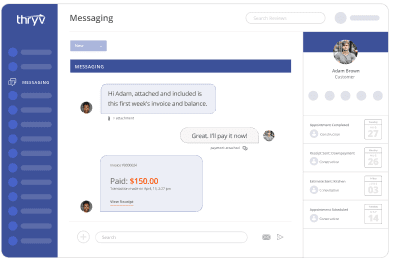
Customers expect fast, convenient communication. They may reach out via social media, review platforms, or business listing sites. Your response time becomes part of your brand. Strong visibility today includes responsiveness. Businesses that centralize communication across channels reduce missed inquiries and improve first impressions. When communication is organized in one system, it’s easier to maintain consistency and avoid letting leads fall through the cracks.
6. AI recommendations and conversational search.
Customers are increasingly turning to AI tools for recommendations. Instead of typing “best HVAC company near me” in Google, they might ask AI, “Who’s the most reliable HVAC company in my area?” or “Find a highly rated family dentist open on Saturdays.”
AI-powered tools and conversational search engines pull answers from across the web, including:
- Local business listings
- Review platforms
- Structured business data
- Online directories
- Frequently mentioned brand signals
- Consistent NAP information (name, address, phone number)
In many cases, AI-generated answers summarize review sentiment, highlight star ratings, and recommend businesses based on overall online visibility, not just website SEO. That means businesses that maintain strong, consistent information across listings and review platforms are more likely to surface in AI-driven recommendations.
To improve visibility in AI search:
- Keep business listings accurate and consistent
- Encourage fresh, detailed customer reviews
- Respond to reviews professionally
- Use clear service descriptions across platforms
- Maintain updated categories and hours
AI systems prioritize clarity, credibility, and consistency. If your information is scattered or outdated, you may be overlooked, even if your website is optimized.
A centralized approach to managing listings and customer interactions helps maintain the structured data AI tools rely on. Platforms like Thryv provide stronger visibility across discovery channels, helping businesses remain discoverable not just in traditional search results but also in emerging AI recommendation environments. As conversational search continues to grow, visibility won’t just mean “ranking.” It will mean being recommended.
Why Centralization Matters in Off-Site Marketing
Managing multiple platforms manually can become overwhelming. Each listing needs updates. Each review needs monitoring. Each message needs tracking. When information is fragmented, consistency suffers. This is where technology can support visibility. Platforms like Thryv help small businesses strengthen marketing visibility across discovery channels while reducing dependence on website traffic alone.
By centralizing customer interactions and maintaining consistent business information, small businesses can:
- Improve first impressions across listings
- Respond more efficiently to inquiries
- Maintain accuracy across platforms
- Track customer engagement in one place
Rather than chasing traffic, businesses can focus on presence, ensuring they are visible and professional wherever customers search.
Visibility is the New Homepage
Your website still matters. It’s your digital home base. But it’s no longer the only, or even primary, place customers decide whether to choose you. Today’s small businesses must think beyond the homepage. Marketing visibility now depends on optimized local business listings, active review management, engaged social profiles, strong map presence, and consistent communication across channels.
When your business is visible, accurate, and responsive everywhere customers search, you create better first impressions before a website click. By embracing off-site marketing for small businesses and strengthening visibility across discovery channels, you reduce reliance on website traffic and build a more resilient digital presence. Because in today’s landscape, your website isn’t the star anymore. Your visibility is.
Get Your Business
Found Online
Are you ready to get serious about your online listings?
FAQ
Q: What is marketing visibility?
A: Marketing visibility refers to how easily customers can find and evaluate your business across online discovery channels, not just your website. It includes your presence in local business listings, search engine results, map results, review platforms, social media profiles, online directories, and even AI-powered recommendations. For small businesses, marketing visibility is about being consistently discoverable wherever customers search. Instead of relying solely on homepage traffic, strong visibility ensures your business makes a positive first impression across every platform that influences buying decisions.
Q: How can I improve my marketing visibility?
A: Improving marketing visibility starts with creating consistency across all of your online touchpoints. This means optimizing your local business listings with accurate name, address, phone number, hours, and service categories; actively encouraging and responding to customer reviews; maintaining updated and responsive social media profiles; and strengthening your presence in map-based searches. It also requires centralizing your customer data so information stays accurate across platforms. When communication, listings, and customer interactions are managed in one place, maintaining visibility becomes easier and more sustainable.
Q: How do customers find local businesses today?
A: Today, customers discover local businesses through a combination of search engines, online reviews, map results, social media platforms, industry directories, referrals shared online, and increasingly, AI-powered recommendation tools. Many customers evaluate businesses directly within search results by comparing ratings, reading reviews, checking photos, and reviewing hours before ever visiting a website. In many cases, they contact a business directly from a listing or messaging platform. Due to this shift, visibility for small businesses online must extend beyond the homepage. A distributed online presence, supported by optimized listings, strong reviews, and responsive communication, ensures customers can find and trust your business wherever they look.