 Simplifying your business.

 One software for all of your locations.

 Earn cash by referring businesses to us.



AI is everywhere. Headlines promise automation, scale, and overnight transformation. But for small businesses, the real question isn’t “What can AI do?”
It’s: “How do I actually use it to grow?”
In our recent webinar, How to Move from AI Hype to Real Marketing Growth, Small Business Experts Kelli Henthorn and Kevin White from Thryv broke it down in practical, real-world terms. No hype. No buzzwords. Just what works.
If you missed it, here’s a deeper look at the key insights and how they connect to real growth. Watch the full webinar on demand here:
AI Only Works When It’s Built Into a System
One of the biggest themes of the session was simple: AI isn’t a strategy. It’s an accelerator.
Many small businesses are experimenting with AI tools — generating social posts here, writing an email there — but still struggling to see measurable results. Why? Because AI layered on top of disconnected systems doesn’t fix the root problem.
Real growth happens when AI is integrated into:
- A website built for search and AI discovery
- A CRM that centralizes every lead and customer
- Automated workflows that handle follow-up
- Marketing systems that consistently nurture prospects
When AI works inside a connected system, it doesn’t just save time; it drives revenue.
The Search Landscape Is Changing Fast
We’re entering what the webinar called “The Age of AI.”
For the first time, Google’s global search dominance is showing early signs of fragmentation. It’s still incredibly strong, but behavior is shifting. Consumers are increasingly turning to AI-powered experiences for answers, recommendations, and research.
Platforms like ChatGPT aren’t just tools anymore; they’re discovery engines.
That shift changes how small businesses need to think about visibility.
It’s no longer enough to:
- Rank for keywords
- Build backlinks
- Publish generic blogs
Now, your content must be:
- Structured clearly
- Easy for AI systems to understand
- Marked up with schema
- Fast-loading and mobile-friendly
- Designed to answer real customer questions
In short, your business must be optimized not just for search engines but for AI summaries.
If AI can’t understand your business, it can’t recommend you.
The 4 Growth Bottlenecks Holding SMBs Back
The webinar outlined four challenges most small businesses face and how AI + software removes those barriers.
1. Low Visibility
Many businesses simply aren’t being found. Their listings are outdated. Their websites aren’t optimized. Their social presence is inconsistent.
The result? Missed opportunities.
AI-powered tools can automatically refresh listings, generate optimized website content, and create consistent social posts, keeping your business visible without adding hours to your week.
Visibility isn’t about doing more. It’s about doing it consistently and strategically.
2. Growth Bottlenecks from Outdated Tools
When marketing, sales, and operations live in separate systems, everything slows down. Leads fall through cracks. Follow-ups are delayed. Reporting is unclear.
This fragmentation is one of the biggest silent growth killers.
By centralizing customer data in a CRM and layering automation on top, businesses remove friction. AI doesn’t just generate content; it helps route leads, personalize outreach, and streamline operations.
That’s how you grow without adding headcount.
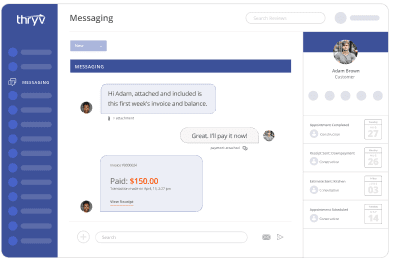
Build Stronger Relationships With Your Customers Using Our Mobile CRM Software for Small Businesses
Our robust CRM software helps you build better relationships with your existing customers and nurture new leads. You can also view and manage all your communications and interactions from anywhere, including on your mobile device or desktop computer.

3. Scattered Customer Management
If your leads are spread across email, text, DMs, and contact forms, you don’t have a lead generation problem; you have a management problem.
One unified inbox and centralized customer record change everything. Suddenly:
- Every conversation is visible
- Every interaction is tracked
- Every follow-up can be automated
When nothing slips through the cracks, revenue increases naturally.
4. Manual Task Overload
Small business owners wear too many hats. Writing posts. Sending reminders. Following up on quotes. Responding to reviews.
Individually, these tasks seem small. Collectively, they drain time and energy.
Automation-forward workflows allow these repetitive tasks to run in the background. AI-generated review responses. Automatic quote follow-ups. Scheduled nurture emails. Appointment reminders sent without lifting a finger.
Small upgrades. Big wins.
AI Do’s and Don’ts: The Human Element Still Matters
The session also grounded the audience in reality: AI is powerful, but it isn’t perfect.
Use AI to:
- Research and brainstorm ideas
- Generate first drafts
- Refine tone and formatting
- Speed up repetitive writing
- Diversify content types
Avoid:
- Publishing without fact-checking
- Copying generic outputs
- Ignoring SEO best practices
- Removing personalization
The businesses seeing real results are the ones using AI as a co-pilot, not a replacement.
Authenticity still wins.
Real-World Applications: Social, Email & Websites
The webinar moved beyond theory and into practical ways small businesses can use AI across their marketing ecosystem.
For social media, the shift is from random posting to intentional strategy. Instead of asking AI to “write a post,” businesses get better results by guiding it with clear inputs — the product, audience, platform, tone, and goal. With structured prompts, AI can generate engagement series, recommend optimal posting times, suggest hashtags, and surface audience insights. The result? Content that builds community instead of adding noise.
For email marketing, AI speeds up campaign creation without sacrificing quality. Whether drafting welcome sequences, promotions, or seasonal emails, the key is clarity — define the offer, urgency, target audience, and call to action. AI creates the foundation, and your refinements ensure it sounds authentic and compelling.
For websites, success goes beyond design. A high-performing site must be SEO-ready, mobile-friendly, fast-loading, and structured for AI discovery with proper schema and indexing support. When built correctly, your business doesn’t just rank in search results — it can appear directly in AI-generated answers, increasing visibility and driving conversions.
AI Is a Multiplier
SMBs using AI reported:
- 3× faster scaling
- 50% more qualified leads
- $30K+ in monthly savings
But the takeaway wasn’t “use more AI.”
It was: Use AI strategically, inside a connected system.
That’s how you move from hype to real marketing growth.
This recap captures the highlights, but the full session includes live demos, prompt examples, and deeper walkthroughs you’ll want to see.
Watch the Full Webinar On Demand
Watch the full replay here:
FAQs
Q: How can small businesses use AI to grow their marketing?
A: Small businesses can use AI to streamline content creation, automate follow-ups, improve SEO visibility, and personalize customer engagement. When paired with connected sales and marketing software, AI helps generate social posts, draft emails, respond to reviews, analyze audience behavior, and optimize websites for search and AI discovery. The key to growth is using AI strategically within a centralized system, not as a standalone tool.
Q: What is AI discovery, and why does it matter for SEO?
A: AI discovery refers to how platforms like AI-powered search engines and chat tools analyze, summarize, and recommend businesses directly in answers, not just link to websites. To optimize for AI discovery, businesses need structured content, schema markup, fast-loading mobile-friendly websites, and clear answers to customer questions. This enhances both traditional SEO rankings and visibility in AI-generated results.
Q: What marketing tasks can AI automate for small businesses?
A: AI can automate repetitive marketing and sales tasks such as social media scheduling, email campaign drafting, review responses, lead routing, quote follow-ups, appointment reminders, and customer nurture sequences. By reducing manual workload, businesses save time, capture more leads, and improve response speed, all of which increase conversion rates and support scalable growth.