
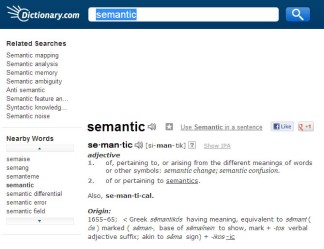
 se·man·tic
What is Semantic SEO…
The high-level concept of semantic SEO is optimizing your websites for “things, not strings” as Google’s head of web spam, Matt Cutts once said. This would mean to think of your page as an entity or theme, and not a set of keywords and phrases. In semantic SEO, every piece of content on your page would be taken into consideration and weighted against a search query. “Things” such as word proximity, word density, phrases, and how people link to your page would be taken into account to determine what the searcher’s query “really meant”. The main proponent of this shift to a more semantic approach is the rapid growth in adoption of mobile devices.
Voice search, area search, GPS, and other indicators all contribute to the need for a more semantic search. Users typically use more conversational language when searching for “things” on their mobile devices (According to Nielsen, 65% of Americans carried a smartphone in 2013). They are usually not looking to craft the most accurate queries when they are not sitting in front of a desktop computer. Google has always foreseen this, and has released new types of results and algorithms (Hummingbird) to accommodate these users. They have numerous patents which try to incorporate all of these signals into understanding user intent and not just the words in the user’s query.
…and why should I care?
 This new search mentality will help differentiate the sites that have adapted to this new paradigm. Sites that are still focusing on specific keywords and rankings will be seeing less and less viable traffic.
Local and small businesses will be the ones that will benefit the most from this shift. Users on mobile devices that are on-the-go, usually are looking for quick questions answered, or are looking for the nearest places to do something. (Whether it be to eat, drink, shop, etc.)
This is where you would combine your content marketing people, user interaction people, and SEO people to get on the same page from the beginning to plan out what you want the search engines and your users to get from your site. Search algorithms are fast evolving to where we should start thinking of them less as robots and more so as the ultimate “user”.
…so, what can I do?
 So if your main purpose is to sell yogurt, you would have to align all of your digital marketing efforts to becoming the thought leader in all things yogurt. Make sure that if there are users looking for yogurt in your area, you will be the one that the search engine displays first. You need to make sure that your name, address and phone number is consistent on every directory, review site, and social media property on the web. Everything you post on your blogs and social media will tie into you being the premiere yogurt guru in your area. Remember that your only competition is the other local yogurt gurus in your area and you must do local, semantic seo better than them. (Unless, you’re an online business selling yogurt nationally/worldwide, then that’s another blog topic.)
Search engines are not completely there in terms of true semantic search yet, and still need help. This is why all of the major search engines have endorsed semantic markup that you can put in your code to help them understand the “things” you are trying to display. This is meta data that helps the search engines identify your content more easily. These meta data descriptors let you mark up everything from products or people, to events that might be relevant on your website. Helping the search engines understand your site better is never a bad thing, especially in the local and small business arena where information like address, phone number, and hours of operation are helpful to all users.
Social media sites and directory reviews will also help the search engine understand what you are trying to offer. Monitoring these sites and getting positive reviews and “votes” will also help you build your brand and, as a by-product, build your standings in the semantic search algorithms, which are trying to display the most relevant results.
 Semantic SEO, just like all digital marketing efforts, takes a lot of commitment and work. It’s not a “set it and forget it” type of campaign. It will require time to create usable content, monitor social networks, and make sure the listings for your business are consistent across the internet. It will take time and/or money to integrate your schema.org markup into your code. The payoff, however will be the best possible website to present to your users and the search engines, and in turn “future-proofing” yourself from any algorithm changes, because everything you are doing is relevant and focused on what you and your website has to offer. If your website has a New Year’s resolution, then it should be to give this a thought, and start on the path to making your own relevant niche online and offline.
TL;DR (Too Long; Didn’t Read)
Semantic SEO does not necessarily rely on keywords and phrases, but rather it takes all of your content surrounding your page and makes inferences to what that page is trying to offer. Things like social media signals, local address consistency, and semantic markup help them understand. Taking this path in SEO will not only help you gain more traffic from the search engines, but will also help “future-proof” your website from new algorithms, since everything you are doing is relevant and worthwhile.