Zero-click search is no longer just an awareness problem. It is now a conversion opportunity.
Customers are finding businesses through Google Maps, reviews, featured snippets, and AI-generated answers without ever visiting a website. They compare providers, read reviews, check hours, and make decisions directly from search results.
That means visibility alone is not enough.
The businesses winning in zero-click search are the ones turning search impressions into real actions: calls, messages, bookings, and appointments.
Instead of asking, “How do I get more clicks?” the better question becomes:
“How do I capture leads before a customer ever reaches my website?”
This is where listings management, reputation management, and messaging tools become critical.
Try the New Thryv Experience
See what’s new — and why it gives your business an edge.
Key Takeaways
- Zero-click search is no longer just an awareness challenge. It is now a major conversion opportunity for small businesses.
- Customers increasingly make decisions directly from Google Maps, reviews, featured snippets, and AI-generated answers without visiting a website.
- Listings management, reputation management, and messaging tools are now critical parts of lead generation.
- The traditional website-first funnel is being replaced by a zero-click funnel focused on faster customer action.
- Success should be measured through listing performance, reviews, messaging activity, and revenue impact — not just website traffic.
Table of Contents
- Where Zero-Click Traffic Still Converts
- Google Maps and Local Listings
- Reviews That Influence Immediate Decisions
- Featured Snippets and FAQ Results
- AI Answers and Recommendations
- How to Capture Leads Without Website Clicks
- Make Every Listing a Conversion Point
- Use Reputation Management to Build Trust Fast
- Turn Messaging Into the New Conversion Funnel
- Website-First Funnel vs. Zero-Click Funnel
- Traditional Website-First Funnel
- Zero-Click Funnel
- How to Measure Visibility Without Clicks
- Listing Performance Metrics
- Reputation Metrics
- Messaging Metrics
- Revenue Metrics
- FAQs
- Visibility Without Clicks Still Wins
Where Zero-Click Traffic Still Converts
Not all zero-click searches are lost traffic. Many are high-intent conversion points.
These are the places where customers make decisions fast.
1. Google Maps and Local Listings
When someone searches “best plumber near me” or “dentist open now,” they often choose directly from map results.
They are looking for:
- proximity
- reviews
- business hours
- service categories
- photos
- click-to-call options
- direct booking availability
A complete and accurate listing often converts faster than a website visit because the customer is already ready to act.
This is why listings management is no longer just SEO support. It is lead generation.
2. Reviews That Influence Immediate Decisions
Reviews are often the final decision-maker.
Customers trust recent reviews more than polished website copy because reviews show real customer experiences.
Reviews also help AI engines understand:
- what services you provide
- what customers value most
- whether your business is active
- how trustworthy your brand appears
In zero-click search, reviews are not just reputation signals. They are conversion triggers.
3. Featured Snippets and FAQ Results
Searchers asking:
- How much does HVAC repair cost?
- Do you offer same-day appointments?
- Do you work weekends?
often get answers directly in search results.
When your business provides clear FAQ content, you increase the chance of being selected as the answer.
That means trust is built before the click ever happens.
4. AI Answers and Recommendations
Customers increasingly ask tools like ChatGPT, Gemini, and voice assistants for recommendations.
Instead of ten blue links, they get one direct answer.
That answer is often influenced by:
- listing consistency
- review quality
- accurate business descriptions
- fresh customer feedback
- structured FAQ content
Visibility now happens before traditional traffic.
How to Capture Leads Without Website Clicks
Zero-click visibility only matters if it drives action.
Here is how small businesses can turn visibility into lead flow.
Make Every Listing a Conversion Point
Your listing should answer:
- Who are you?
- What do you do?
- Why should someone trust you?
- What should they do next?
Include:
- accurate NAP (name, address, phone)
- service descriptions
- updated seasonal hours
- strong photos
- booking links
- messaging options
- FAQs where available
Every listing should function like a mini landing page.
Use Reputation Management to Build Trust Fast
Reviews should be actively generated, monitored, and responded to.
Strong review strategy means:
- requesting reviews consistently
- responding to both positive and negative feedback
- highlighting service-specific praise
- maintaining recent review activity
A five-star reputation is often the reason someone calls immediately.
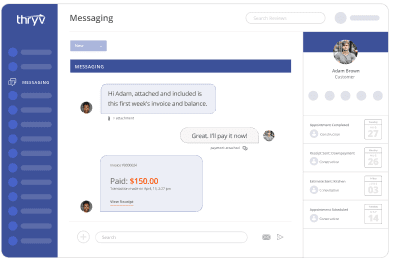
Turn Messaging Into the New Conversion Funnel
Customers increasingly want to message instead of call.
If your business responds quickly through text, chat, or social messaging, you reduce friction and increase close rates.
Fast response time matters more than a perfect homepage.
Thryv AI Lead Flow specifically connects listings visibility to automated lead capture and follow-up so businesses do not lose high-intent leads after discovery.
Website-First Funnel vs. Zero-Click Funnel
Traditional Website-First Funnel
Search → Click Website → Browse → Contact Form → Follow-Up → Sale
Challenges:
- traffic does not guarantee conversions
- drop-off before contact
- slow response times
- high friction
Zero-Click Funnel
Search → Listing / Reviews / AI Answer → Call / Message / Booking → Follow-Up → Sale
Benefits:
- fewer steps
- faster decisions
- higher intent leads
- stronger local conversion opportunities
The goal is no longer forcing every customer to your website.
The goal is reducing the distance between discovery and action.
How to Measure Visibility Without Clicks
Website traffic alone no longer tells the full story.
If customers convert directly from search, your KPIs need to shift.
Track these instead:
Listing Performance Metrics
- profile views
- map appearances
- direction requests
- click-to-call activity
- bookings from listings
Reputation Metrics
- review volume
- review recency
- average star rating
- response rate to reviews
Messaging Metrics
- inbound text and chat volume
- response speed
- booked appointments from conversations
- lead-to-customer conversion rates
Revenue Metrics
- calls that become customers
- repeat customers from local search
- appointment volume from search visibility
- lead source attribution
As Thryv Reporting Center emphasizes, reporting should focus on actionable business outcomes, not vanity traffic metrics alone.
FAQs
What is zero-click search for small businesses?
Zero-click search happens when customers find the information they need directly in search results without clicking through to a website. This often includes Google Maps listings, reviews, featured snippets, FAQs, and AI-generated answers. For small businesses, this means customers can discover, trust, and contact you directly from search results.
How can small businesses generate leads without website clicks?
Small businesses can generate leads by optimizing business listings, improving online reviews, enabling direct messaging, and making booking options easy to access. Accurate listings, strong reputation management, and fast response times help turn search visibility into calls, texts, and appointments without relying on website traffic alone.
Why are reviews important for zero-click search?
Reviews help customers make fast decisions and also improve how search engines and AI platforms understand your business. Recent, high-quality reviews build trust, improve local rankings, and increase the chances that customers choose your business directly from search results.
What is the difference between a website-first funnel and a zero-click funnel?
A website-first funnel requires customers to visit your website before contacting you, which adds more steps and potential drop-off points. A zero-click funnel allows customers to call, message, or book directly from listings, reviews, or AI answers, creating a faster path to conversion.
How should businesses measure success in zero-click search?
Instead of focusing only on website traffic, businesses should track listing views, map appearances, calls, messages, review volume, response rates, and booked appointments. These metrics provide a clearer picture of how search visibility turns into real revenue.
The Guide to AI for
Small Business
Explore real ways AI can help your small business save time, automate tasks, and drive faster, smarter growth.
Visibility Without Clicks Still Wins
Zero-click search is not reducing opportunity. It is changing where opportunity happens.
Customers still search. They still compare. They still buy.
They simply do it faster and often without ever visiting your website.
Businesses that win are the ones that optimize listings, strengthen reviews, and make messaging effortless.
Because when customers can find you, trust you, and contact you instantly, the click becomes optional.
The conversion does not.