
Pricing out HVAC jobs can be one of the hardest parts of running a small firm. Charge too much, and you risk losing customers. Charge too little, and you’re cutting into your profit. That’s where a reliable HVAC calculator comes in handy. This tool helps HVAC businesses estimate job costs quickly and accurately, whether you’re quoting a residential AC install or a full commercial ductwork overhaul.
This guide will walk you through what a job price calculator does, how to use one effectively, and why it’s a must-have if you’re looking to grow your business.
What is an HVAC calculator?
An HVAC calculator is software for HVAC businesses that helps you estimate the cost of an HVAC job. It factors in a range of variables – labor, materials, equipment, overhead, and profit margins – so you can create fast, accurate quotes for customers.
There are simple calculators that give ballpark figures and advanced tools that integrate with HVAC service software for scheduling, invoicing, and inventory management. The best solutions are part of a comprehensive platform of small business software for HVAC businesses, offering an all-in-one solution that keeps pricing consistent across your jobs.
Why HVAC calculators matter for small businesses
For small HVAC companies, every dollar counts. Having a job price calculator built into your workflow can be a game-changer.
Here’s why:
- Speed and accuracy: Get reliable job estimates in minutes instead of hours. That means less guesswork, faster customer responses, and fewer pricing mistakes.
- Professionalism: A clean, accurate quote shows customers you’re organized and trustworthy.
- Profit protection: With the right margins and markups included, you can ensure you’re pricing your services to stay competitive and profitable.
If you’re starting an HVAC business, using a calculator from day one helps you develop smart prices without relying on guesswork.
Key components of an HVAC job price calculator
A good job price calculator should account for all the key costs associated with a job. These typically include:
Labor
- Hourly rates for technicians (including your own time)
- Estimated number of hours per job
- Payroll taxes, insurance, and benefits
Materials
- Parts, fittings, and refrigerants
- Consumables like tape, fasteners, and caulk
- Custom or specialty items
Equipment costs
- Purchase or rental of tools and machinery
- Depreciation and maintenance of owned equipment
Overhead
- Travel and transportation
- Office and admin expenses
- Licenses, permits, and HVAC technician certification & license costs
Profit margin
- Targeted markup based on job type
- Built-in buffers for unexpected costs
How to use an HVAC calculator effectively
A calculator is only helpful if you know how to use it well. Here’s how to get the most out of your HVAC calculator:
- Be detailed: Include every possible cost, no matter how small. Those tape rolls and gas receipts add up.
- Set standard markups: Establish consistent profit margins across job types so you’re not pricing by gut.
- Review and refine: Track actual costs vs estimates over time – a job tracking spreadsheet like this one is helpful for this. Then, fine-tune your calculator inputs to improve accuracy.
- Use templates: Save time with reusable templates for common jobs like tune-ups, duct cleaning, or new system installs.
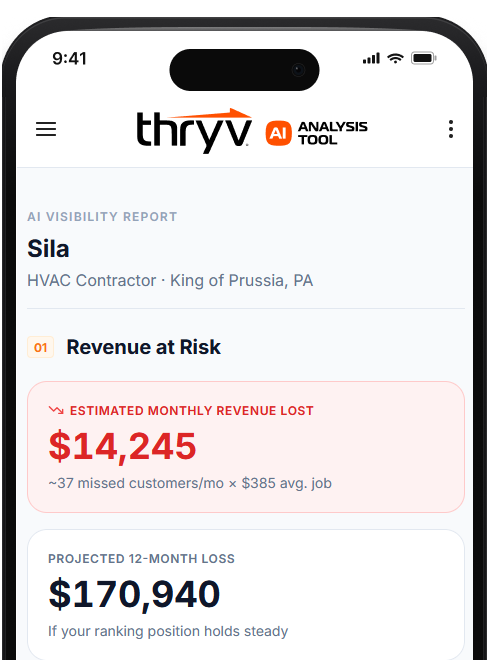
See how your business stacks up against competitors
Get a free AI-powered report showing where you rank online and what to fix first.
HVAC calculator features to look for
When shopping around for HVAC business software with a job price calculator, keep an eye out for these must-have features:
- Custom labor and material databases
- Support for flat-rate or time-and-materials pricing
- Ability to save and reuse job templates
- Mobile-friendly access for in-the-field use
- Integration with inventory, invoicing, and scheduling tools
The right HVAC software for small businesses should make quoting, closing, and completing jobs easier, not harder.
How HVAC calculators support business growth
Using an HVAC calculator isn’t just about working smarter – it’s about scaling your business. Consistent, accurate quotes help you:
- Win more jobs with faster, professional proposals.
- Build trust with customers by sticking to your estimates.
- Streamline your operations and reduce costly misquotes.
- Make better long-term decisions by analyzing pricing trends.
Pricing models for HVAC businesses
Before you plug numbers into a calculator, you need to know how you’re structuring your prices. Different pricing models work better depending on your services and customer base.
Flat-rate pricing
- Offers customers a fixed cost upfront, based on standardized job types.
- Great for residential jobs and routine maintenance.
- Makes estimating fast and easy with less room for surprises.
Time and materials pricing
- Charges are based on actual hours worked plus the cost of materials used.
- Ideal for complex or custom commercial projects where variables change on the fly.
- Requires detailed tracking to ensure transparency and profitability.
Tiered or package pricing
- Bundles services into pricing tiers (e.g., basic, premium, deluxe).
- Helps upsell additional services while giving customers options.
- Works well for seasonal promotions and HVAC marketing ideas focusing on value.
Value-based pricing
- The price is based on the perceived value to the customer, not just cost plus markup.
- Can potentially lead to higher profits, especially when you offer specialized expertise or a strong brand reputation.
Strategies for HVAC job pricing
Smart pricing is more than just plugging in numbers. Here are proven strategies to help you stay competitive and profitable:
- Know your break-even point: Use your calculator to figure out the bare minimum you need to charge to cover all costs. This sets the floor for your pricing and prevents underbidding.
- Factor in local market rates: Research what other HVAC businesses charge in your area. Stay in range – but don’t be afraid to charge more if you offer better service or faster turnaround.
- Adjust for complexity and urgency: Charge premiums for emergency calls, after-hours work, or unusually complicated jobs. Let your calculator include multipliers or markup adjustments for these situations.
- Use software to track historical data: Many HVAC business software platforms log previous job costs, profit margins, and customer preferences. Use that data to fine-tune your estimates and see which jobs deliver the most ROI.
- Be transparent with customers: Break down your quote to show what’s included – labor, materials, warranties, etc. This builds trust and makes it easier to justify your pricing for HVAC services.
Free vs. paid HVAC calculators
There are free HVAC calculator tools available online, often in the form of spreadsheets or basic mobile apps. These can be a great starting point, along with other free tools for HVAC business management.
For more serious business growth, it’s worth exploring software for HVAC companies that offers comprehensive solutions for managing all aspects of your business. That’s where Thryv can help.
Thryv®: HVAC calculators – and so much more
Thryv’s software delivers nearly all the tools you need to run your HVAC business – including a free job cost calculator. With Thryv’s HVAC software, you can manage almost every aspect of your business from one central dashboard.
Thryv’s robust software includes tools for:
- Marketing: Send automated emails, manage online reviews, and schedule social posts to keep your business top-of-mind with customers.
- Communication: Centralize customer messages, text updates, appointment confirmations, and online approvals.
- Operations: Simplify scheduling, handle recurring appointments, automate invoicing, and accept payments online.
- Customer experience: Offer customer portals for easy booking, payments, and document sharing – improving convenience and professionalism.
When you’re ready to take the next step in growing your HVAC business, Thryv has everything you need to run and grow your business efficiently.
Frequently asked questions
Use your HVAC calculator regularly, update it with new costs, and research local competitors to ensure your rates reflect market conditions.
Yes. Just make sure your calculator can adjust for complexity, square footage, labor hours, and material variations.
Track real-time costs using integrated tools in your HVAC software so you can adjust estimates and keep your margins intact.
Not at all. Many platforms like Thryv are built for ease of use, with simple interfaces and step-by-step workflows.
Review them quarterly to keep up with changes in labor costs, materials, and seasonal demand.
Yes. Some tools track expenses, generate reports, and keep records organized for tax season and licensing compliance.
Break out labor, parts, equipment, estimated time, warranties, and terms. Clear quotes reduce misunderstandings and delays.
Use HVAC management software with job costing reports that compare estimated vs. actual expenses and revenue.
Absolutely. It improves speed, accuracy, and presentation, making your business look more professional and trustworthy.