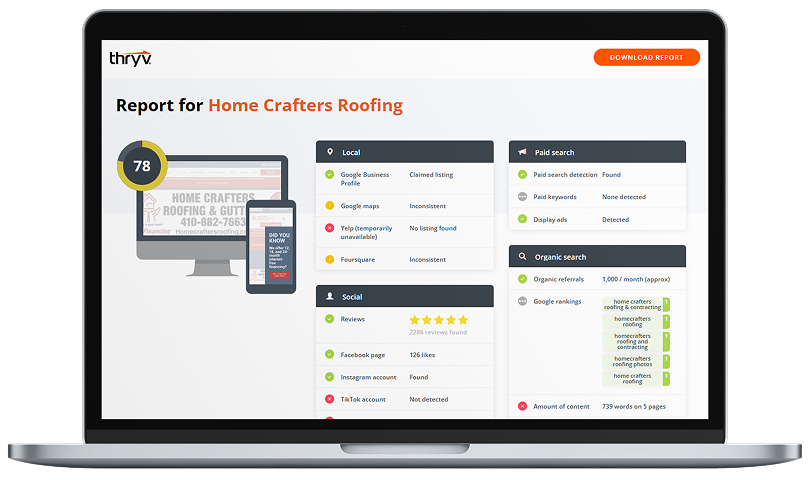
Simplifying your business.

 One software for all of your locations.

 Earn cash by referring businesses to us.



When your marketing is already in motion, the goal isn’t to hit reset (just because it’s the new year) — it’s to refine, streamline, and build on what’s working. Many small businesses reach a stage where campaigns are active, customers are engaging, and visibility is growing, yet progress still feels uneven or overly manual.
A strong small business marketing strategy isn’t just about launching more campaigns. It’s about creating systems that support consistent execution, better customer experiences, and scalable growth. When marketing, customer management, and operations are connected, momentum becomes easier to maintain — even as your business grows.
This checklist helps small businesses strengthen their marketing strategy without slowing down what’s already working.
How To Scale Smarter Checklist
1. Evaluate What’s Fueling Growth
2. Streamline Your CRM to Support Ongoing Marketing Automation
3. Keep Online Listings Aligned with Your Marketing Strategy
4. Turn Big Goals into Quarterly Marketing Focus
5. Schedule Campaigns So Marketing Runs Consistently
6. Why the Right Systems Sustain Marketing Momentum
Evaluate What’s Fueling Growth — and What’s Creating Friction
Momentum thrives on clarity. Instead of looking at marketing performance as a one-time review, successful businesses continuously evaluate which efforts are driving results.
Focus on:
- Marketing channels that consistently generate leads or bookings
- Campaigns that convert versus those that stall after launch
- Points in the customer journey where follow-ups slow or stop
When your CRM for small businesses is connected to marketing activity and scheduling, it becomes much easier to identify gaps, optimize workflows, and improve results without adding more tools.
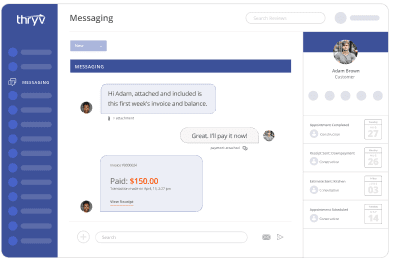
Build Stronger Relationships With Your Customers Using Our Mobile CRM Software for Small Businesses
Our robust CRM software helps you build better relationships with your existing customers and nurture new leads. You can also view and manage all your communications and interactions from anywhere, including on your mobile device or desktop computer.

Streamline Your CRM to Support Ongoing Marketing Automation
As campaigns continue, contact lists grow quickly — and without regular maintenance, even the best marketing automation loses effectiveness.
To keep your small business marketing tools working efficiently:
- Clean up duplicate or outdated contacts
- Update customer records based on recent bookings or payments
- Segment audiences by service, frequency, or engagement
A streamlined CRM allows marketing automation to stay relevant and personalized, helping every campaign build on the momentum of the last.
Keep Online Listings Aligned with Your Marketing Strategy
Visibility plays a critical role in maintaining momentum. Accurate and consistent listings reinforce trust and make it easier for customers to take the next step.
Make listings management part of your small business marketing strategy by:
- Updating services and descriptions as offerings evolve
- Keeping hours, availability, and seasonal messaging current
- Ensuring changes sync across platforms
Centralized online listings management helps small businesses stay visible and credible without constant manual updates.

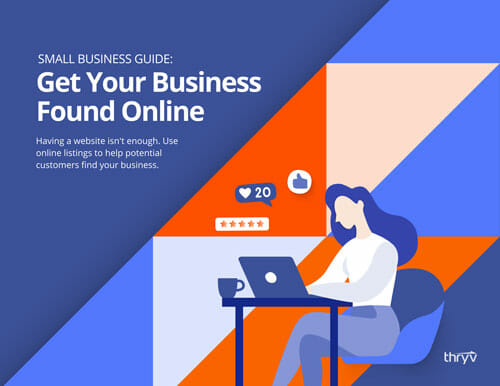
Free Guide: Online Listings Guide – Get Your Business Found Online
Showing up prominently in online searches is a great way to attract new customers to your business. In this free ebook, we’ll show you how to manage and optimize your online listings.
Download
Turn Big Goals into Quarterly Marketing Focus
Sustained growth comes from breaking long-term objectives into clear, actionable checkpoints. Quarterly planning keeps marketing focused while allowing room to adapt.
Strong quarterly goals may include:
- Increasing lead volume from your highest-performing channels
- Improving customer retention and repeat bookings
- Expanding reach through targeted, automated campaigns
When goals are supported by marketing workflow automation and templates, execution stays consistent — even as priorities shift.
Schedule Campaigns So Marketing Runs Consistently
Consistency is one of the biggest competitive advantages for small businesses. Scheduling campaigns in advance allows marketing to continue running smoothly during busy seasons.
Examples include:
- Automated follow-ups after appointments or payments
- Seasonal promotions scheduled weeks ahead
- Messages triggered by customer behavior
By combining marketing automation for small businesses with CRM, scheduling, and payments, campaigns become part of everyday operations — not extra work.
Why the Right Systems Sustain Marketing Momentum
The most effective small business marketing strategies rely on simplicity, not complexity. Disconnected platforms create friction, slow execution, and make scaling harder than it needs to be.
An all-in-one business management software approach allows small businesses to:
- Execute marketing faster with fewer tools
- Deliver consistent, personalized customer experiences
- Compete with larger businesses using smarter systems
Templates and guided workflows help businesses build on what’s already working instead of starting over.
Build on Your Marketing Momentum — and Keep Scaling
Marketing momentum is valuable. Protecting it means refining your systems, not reinventing your strategy. With the right tools in place, every campaign strengthens customer data, improves execution, and supports long-term growth.
A connected small business marketing strategy turns ongoing effort into predictable results — making growth easier to sustain as your business evolves.
Get Your Business
Found Online
Are you ready to get serious about your online listings?
FAQ
Q: What is a small business marketing strategy?
A: A small business marketing strategy is a structured plan that outlines how a business attracts, engages, and retains customers using consistent messaging, clear goals, and connected tools like CRM, automation, and digital marketing platforms.
Q: How can small businesses maintain marketing momentum as they grow?
A: Small businesses maintain marketing momentum by using automated campaigns, organizing customer data in a CRM, scheduling promotions in advance, and regularly reviewing performance to refine what’s working without starting over.
Q: Why is marketing automation important for a small business marketing strategy?
A: Marketing automation helps small businesses stay consistent by triggering emails, texts, and follow-ups based on customer actions. It reduces manual work while improving response time, personalization, and overall campaign effectiveness.
Q: What tools are essential for an effective small business marketing strategy?
A: Essential tools include a CRM for managing customer relationships, marketing automation for consistent outreach, online listings management for visibility, and scheduling and payment tools that connect marketing to real customer activity.
Q: How does an all-in-one platform improve small business marketing results?
A: An all-in-one platform improves marketing results by keeping CRM, scheduling, payments, and automation in one system. This reduces friction, improves data accuracy, and helps small businesses scale marketing efforts more efficiently.