 Simplifying your business.

 One software for all of your locations.

 Earn cash by referring businesses to us.



Last week, Thryv and Search Engine Journal teamed up for a timely and strategic webinar, “Local AEO Best Practices for Small Businesses in 2026,” featuring Raj Madhvani, Co-Founder of AlphaPros.ai. The session focused on the rapidly evolving landscape of AI-driven local search and how small businesses can stay visible, trusted, and competitive as traditional SEO transitions into Answer Engine Optimization (AEO).
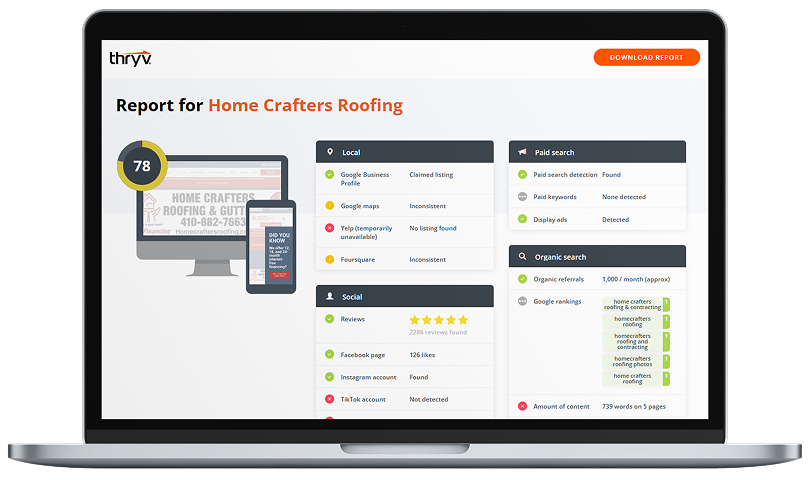
Market and Grow Your Business More Effectively With Thryv Marketing Center
Thryv Marketing Center helps you attract new customers to your business and shows you which marketing strategies work best for your customers so you don’t waste time and money on the wrong tactics.

Why Local AEO Matters in 2026
Raj kicked things off by framing the current reality: search isn’t just search anymore. Consumers are increasingly using AI assistants — like Google Gemini, ChatGPT, Siri — as part of their decision journey. Often, these interactions bypass traditional web clicks entirely, meaning businesses that don’t appear in AI recommendations are missing calls, bookings, and most importantly revenue.
The New Search Landscape
- People search everywhere — not just Google, but maps, voice assistants, social platforms, and conversational AI.
- A fragmented customer journey now intersects multiple touchpoints before someone calls, books, or visits.
- While Google still captures most “buying & going” actions, AI tools dominate research and early discovery — and many searches end without traditional clicks.
This shift explains why visibility in AI recommendations is now as critical as ranking in search engine results pages (SERPs).
Core AEO Best Practices Shared by Raj
The webinar broke down an actionable strategy local businesses can adopt to ensure AI assistants recommend them with confidence:
1. Turn Your Website Into an Answer Hub
Build clear, structured pages for each core service and location. Include frequently asked questions (FAQs) that address the way people ask things in natural language (e.g., “Who’s the best plumber in Bellevue?”).
Why this matters: AI models look for definitive answers to user queries — not just keyword matches.
2. Own Your Google Business Profile & Maps Presence
Claim and fully optimize your business listing:
- Accurate categories
- Current hours
- Photos and posts
- FAQs and service descriptions
A robust profile signals trust and relevance to both consumers and AI assistants.
3. Build Review & Reputation Momentum
96% of local searchers read reviews — and AI systems heavily weigh reviews as trust signals.
Raj encouraged:
- Actively asking happy customers for reviews
- Responding to all feedback
- Using direct review links to make leaving feedback easier
Fresh, detailed reviews help AI confidently highlight your business for specific queries.
4. Clean Up Your Listings & Consistency
Consistency matters. Make sure your:
- Business name
- Address
- Phone number
- Website
…match exactly everywhere online — from Google to Yelp to niche directories.
Inconsistencies confuse both search engines and AI assistants, reducing your chance of being recommended.
5. Share Helpful Content & Showcase Experience
Content isn’t just for rankings anymore — it’s structured data AI can digest:
- FAQ pages
- Short guides
- Case studies
- Before/after visuals
- “Meet the team” sections
When AI sees detailed, helpful, and user-focused content, it’s more likely to cite your business as the best answer.
6. Use AI Tools as Assistants — Not Authorities
AI tools like ChatGPT can help you brainstorm and draft content, but Raj stressed that human editing, domain expertise, and actual experience must drive the final output. Let AI aid efficiency — not replace your brand voice or factual accuracy.
The 10-Step AI Era SEO Checklist
Raj wrapped up with a practical checklist — quick tasks your business can do this quarter:
- Complete every field in your Google Business Profile.
- Add 5+ new photos (interior, exterior, team).
- Fix any inconsistent contact info online.
- Ask for 10 reviews this month.
- Respond to all reviews (especially negative ones).
- Test your website on mobile for speed and clarity.
- Create/update pages for each main service.
- Add FAQ blocks to those pages.
- Show proof of experience (case studies, photos).
- Set a quarterly reminder for content checks.
AI isn’t just reshaping search — it’s rewriting local discovery.
To win in 2026, small businesses must:
- Optimize for answers, not just rankings.
- Lead with trust signals (reviews, accurate data, structured content).
- Meet customers where AI assistants expect to find them.
Visibility in voice, maps, AI chats, and conversational search isn’t optional anymore — it’s a strategic imperative.
If you couldn’t attend live—or want a second look at the insights—this on-demand webinar breaks down practical Local AEO strategies you can start using right away to improve visibility in AI-powered search results.
How-to Guide:
Automate Your Small
Business
Learn how to streamline your operations, boost productivity, set your business up for growth, and more in this free resource.
FAQs
Q: What is Local AEO and how is it different from SEO?
A: Local Answer Engine Optimization (AEO) focuses on helping small businesses appear in AI-generated answers, voice searches, and map-based results instead of just traditional Google rankings. While SEO targets keywords and webpages, Local AEO prioritizes structured data, clear answers, reviews, and trusted local signals that AI assistants use to recommend businesses.
Q: Why is Local AEO important for small businesses in 2026?
A: Local AEO is critical in 2026 because more customers are using AI tools like Google Gemini, ChatGPT, and voice assistants to find local services. Many of these searches don’t lead to website clicks, so businesses that aren’t optimized for AI answers risk losing visibility, calls, and bookings even if they rank well in traditional search results.
Q: How can a small business optimize for AI search and voice assistants?
A: Small businesses can optimize for AI search by creating clear service pages, adding FAQ sections that match natural language questions, maintaining accurate business listings, and building strong online reviews. Consistent business information and helpful, experience-based content make it easier for AI tools to confidently recommend a business.
Q: Do Google Business Profiles still matter for Local AEO?
A: Yes, Google Business Profiles remain one of the strongest signals for Local AEO. AI assistants rely on verified listings, reviews, photos, and up-to-date business details to determine credibility and relevance. A fully optimized profile increases visibility in maps, voice search, and AI-generated local recommendations.
Q: Can small businesses use AI tools to improve AEO without losing authenticity?
A: Small businesses can safely use AI tools to support AEO by brainstorming content ideas, drafting FAQs, and organizing information. However, human review is essential to ensure accuracy, local expertise, and brand voice. AI works best as an assistant—not a replacement—for real experience and customer knowledge.