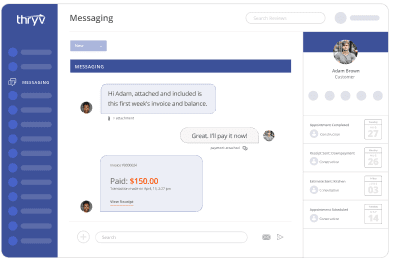
 Simplifying your business.

 One software for all of your locations.

 Earn cash by referring businesses to us.



Not long ago, showing up in search meant ranking on page one of Google. Today, that goal has shifted. Customers are increasingly asking their phones, smart speakers, and AI-powered search tools direct questions — and expecting one clear answer in return.
When someone says, “Who’s the best electrician near me?” or “What time does the nearest salon close?” they aren’t scrolling through results. They’re trusting Google, AI search, or a voice assistant to choose for them.
That raises an important question for small business owners: how do these platforms decide which business becomes the answer?
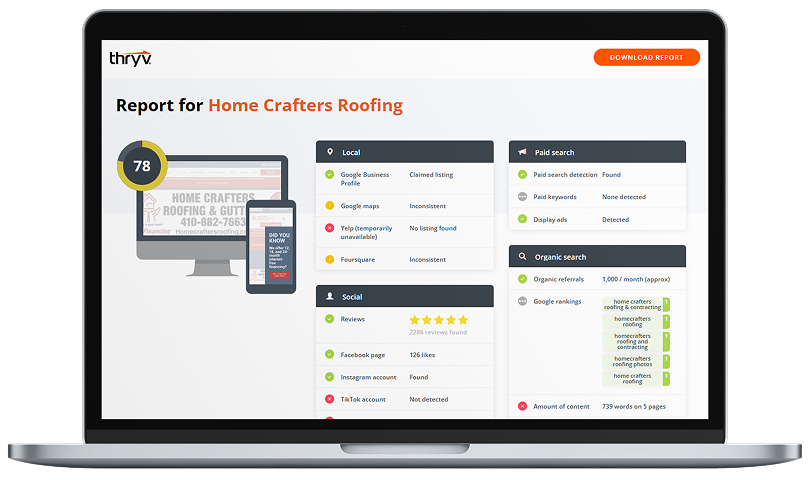
Market and Grow Your Business More Effectively With Thryv Marketing Center
Thryv Marketing Center helps you attract new customers to your business and shows you which marketing strategies work best for your customers so you don’t waste time and money on the wrong tactics.

Clarity Is What Helps AI Understand Your Business
AI search tools don’t think the way humans do. They don’t “read between the lines” or infer meaning from clever marketing language. Instead, they look for content that is easy to interpret, clearly written, and structured in a way that removes ambiguity.
When a customer asks a question, search engines scan the web for content that answers it directly. Pages that clearly explain services, locations, and value — without forcing users to dig.
This is why businesses that organize their websites with clear headings, concise explanations, and well-defined sections are more likely to surface in AI-driven results. When your content mirrors the way customers naturally ask questions, search engines can confidently match your business to customer queries.
Trust Is Built by Being Consistent Everywhere Customers Look
Even the clearest website won’t win visibility if your information doesn’t match elsewhere online.
AI search systems validate what they find by cross-checking your business details across the web. Your website, listings, directories, reviews, and profiles all work together to tell one story about your business. When that story is consistent, AI platforms gain confidence in sharing your information with users.
But when details conflict — different hours, outdated phone numbers, mismatched service descriptions — AI systems hesitate. And hesitation usually means another business is chosen instead.
For small businesses, consistency becomes a quiet but powerful advantage. Keeping business information centralized and accurate reinforces credibility, helping search engines recognize your business as reliable enough to recommend.
Being the Best Answer Matters More Than Saying the Most
Many business owners assume longer content equals better visibility. In reality, AI search and voice assistants are drawn to answer-ready content, not content that simply takes longer to read.
When AI selects a response, it looks for sections of content that can stand alone as a clear answer. FAQs, short explanations, and clearly labeled service descriptions are far more useful than long paragraphs without structure.
A page that quickly explains what you do, who you serve, and how customers can reach you gives AI systems exactly what they need. These pages are easier to turn into featured snippets, voice responses, and AI-generated summaries.
The goal isn’t to say everything — it’s to say the right thing clearly.
Why Small Businesses Are Well-Positioned for AI Search
While AI search may sound intimidating, it actually rewards the fundamentals many small businesses already value: clarity, trust, and strong customer relationships.
Businesses that maintain accurate listings, structure their websites thoughtfully, and actively manage reviews send powerful trust signals. These signals help AI search engines determine not just who could answer a question but who should.
When your digital presence is aligned, search engines don’t have to guess. They can confidently connect customers with your business at the moment they’re ready to act.
Reshaping How Answers Are Delivered
AI search and voice assistants aren’t replacing Google. They’re reshaping how answers are delivered. And in this new landscape, visibility comes from being clear, consistent, and trustworthy across every digital touchpoint.
Small businesses that focus on making their information easy to understand and easy to verify don’t just show up more often — they become the answer customers hear first.
Get Your Business
Found Online
Are you ready to get serious about your online listings?
FAQs
Q: How do AI search engines decide which business answers to show?
A: AI search engines prioritize clear content, consistent business information, and strong trust signals across websites, listings, and reviews.
Q: Whydoes voice search favor certain businesses over others?
A: Voice assistants rely on concise, well-structured answers that are easy to understand and confidently verified across multiple sources.
Q: What type of content works best for AI-driven search results?
A: FAQ sections, clearly defined services, and short, direct explanations perform best in featured snippets and AI answers.
Q: How important are reviews for AI search visibility?
A: Reviews strengthen trust signals that help AI platforms determine whether a business is credible enough to recommend.
Q: Can small businesses compete in AI search without advanced SEO skills?
A: Yes. Clear website structure, accurate listings, and consistent business information go a long way in improving AI search visibility.