Simplifying your business.

 One software for all of your locations.

 Earn cash by referring businesses to us.



If you’re a small business owner, marketing probably lives in the same mental bucket as laundry and email — always there, never entirely done. You might even have reminders to post on social, reply to reviews, follow up with leads, send reminders, and run promotions. When you miss a few days, it feels like your visibility drops instantly.
That pressure is exactly why more businesses are shifting toward what we call invisible marketing — marketing that keeps working in the background, even when you’re focused on actually running your business. Instead of relying on manual effort every day, systems powered by marketing automation handle the repetitive tasks that keep your brand present and your pipeline active.
Platforms like Thryv make this possible by bringing key marketing functions into one place and using automation to keep things moving without constant hands-on work. The result? You stay visible, responsive, and professional, without living inside your marketing tools.
What is invisible marketing?
Invisible marketing is the behind-the-scenes engine that keeps your business showing up consistently, without you having to remember every post, message, and follow-up. It’s built on marketing automation for small businesses, where workflows take over the repeatable parts of marketing so your effort is focused on strategy and service, not constant execution.
Why Manual Marketing Breaks at Scale
Manual marketing feels manageable at first. Then you get busy.
- New clients come in
- Operations take over your day
- Customer messages pile up
- Marketing becomes “something I’ll do later.”
The problem? Marketing only works when it’s consistent. Gaps in communication lead to:
- Slower lead response times
- Fewer reviews
- Lower social visibility
- Missed follow-ups
As your business grows, manual systems don’t scale. They create marketing fatigue.
Staying Present Without Being Overwhelmed
Invisible marketing solves this by creating a constant baseline of activity:
- Leads hear from you automatically
- Customers are prompted to leave reviews
- Social content goes out on schedule
- Reminders and confirmations reduce no-shows
With a platform like Thryv, these actions can be triggered by real customer behavior (bookings, purchases, or inquiries), making your marketing responsive rather than reactive.
How to Use Automated Marketing Workflows
1. Automated follow-ups.
2. Automated social media posting.
3. Online review automation.
4. Appointment reminders and confirmations.
5. Re-engagement campaigns.
1. Automated follow-ups.
Automated follow-ups are one of the most powerful forms of invisible marketing because they directly connect interest to action, without relying on memory, sticky notes, or “I’ll do it later.” For small businesses, the gap between a customer inquiry and a response is often where opportunities are lost. People are busy, attention spans are short, and prospects frequently reach out to multiple businesses at once. If you don’t respond quickly or continue the conversation, the lead simply moves on. Automation closes that gap.
Automated follow-up workflows respond to customer actions, not guesswork. When someone:
- Submits a contact form
- Requests a quote
- Books an appointment
- Asks a question
The system immediately triggers a sequence of emails or messages designed to keep the conversation going. With Thryv, these follow-ups can connect with scheduling and customer information so responses feel timely and relevant, not generic.
2. Automated social media posting.
Social media is one of the most visible parts of your marketing, and one of the easiest to fall behind on. You don’t stop caring about your online presence. You just get busy. A full week of appointments, staffing issues, or admin work can mean no posts, no updates, and no reminders that your business exists. Automated social media posting turns social from a daily task into a system.
Automation shifts your role from poster to planner.
Instead of logging in every day, you:
- Create content in batches
- Schedule posts ahead of time
- Let the system publish automatically
With Thryv, social posting can be integrated into your broader marketing workflows, so your brand stays active while you focus on customers.
3. Online review automation.
Online reviews are one of the most powerful trust signals for small businesses, but consistently asking for them is where things fall apart. You mean to ask. You plan to follow up. Then the day gets busy, the moment passes, and the review never happens. That’s why review requests are a perfect fit for invisible marketing.
Online review automation connects customer milestones with feedback requests. When a service is completed or a transaction occurs, the system can automatically send a polite request for a review. No awkward asking. No forgotten follow-ups.
With Thryv, review requests can be built into your workflow so they happen at the right moment, when the experience is fresh, and customers are most likely to respond.
Free Guide: The Small Business Guide To Automation
Discover five time-saving automations that take the repetitive tasks off your plate — so you can grow your business without hiring extra help.
GRAB YOUR FREE COPY
4. Appointment reminders and confirmations.
Appointment reminders might seem like an operational detail, but they’re actually a powerful part of invisible marketing. Every reminder is a brand touchpoint. Every confirmation reinforces professionalism. And every prevented no-show protects revenue. When handled manually, reminders are time-consuming and inconsistent. When automated, they quietly improve customer experience and business performance simultaneously.
Automation ensures customers receive timely communication before their appointment, without you or your team having to reach out manually.
These systems can:
- Send reminders a set time before the appointment
- Ask customers to confirm attendance
- Provide details like date, time, and location
With Thryv, reminders can be tied directly to your scheduling system, so communication happens automatically the moment an appointment is booked.
5. Re-engagement campaigns.
Not every customer who disappears is lost; most just got busy. Re-engagement campaigns are one of the most overlooked forms of invisible marketing because they focus on people who already know you, already trust you, and already chose your business once. That makes them far easier (and more affordable) to bring back than constantly chasing brand-new leads.
Re-engagement workflows automatically reach out to customers after a set period of inactivity. Instead of you thinking, “We haven’t seen them in a while…”, the system tracks timing and sends a message that says, in effect, “We’re still here.”
Automation can trigger messages like:
- “It’s been a while — we’d love to help again.”
- Seasonal service reminders
- Check-ins tied to past services
- Special offers for returning customers
These aren’t aggressive sales pushes. They’re gentle nudges that bring your business back into the customer’s awareness.
With Thryv, these campaigns can be connected to customer history and service timelines, making outreach feel timely rather than random.
Let Your Marketing Run in the Background
Invisible marketing isn’t about doing less; it’s about being smarter with your time. By using marketing automation for small businesses, you create systems that maintain consistency, manage timing, and ensure follow-through. Tools like Thryv help turn marketing into an ongoing process instead of a daily scramble. The result is steady visibility, better customer communication, and more growth, without marketing taking over your schedule.
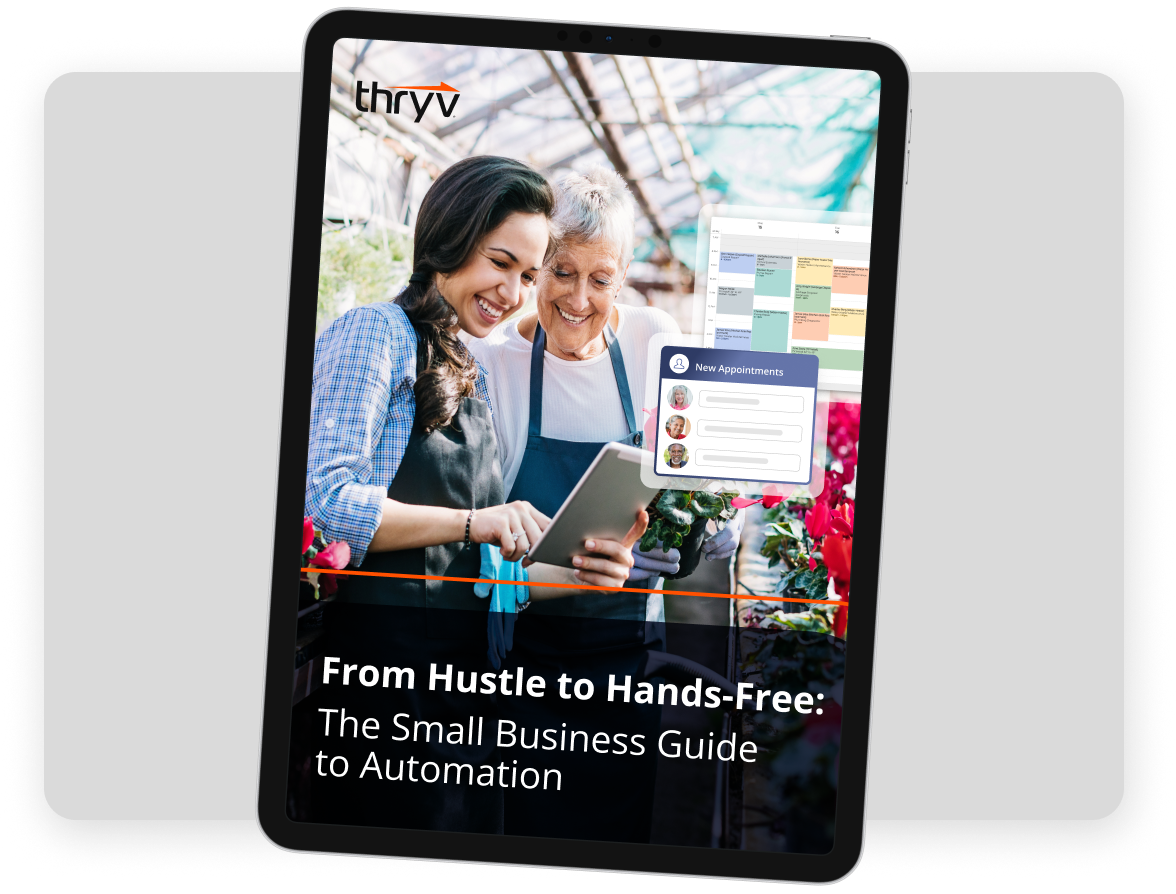
The Small Business
Guide To Automation
Discover five time-saving automations that take the repetitive tasks off your plate — so you can grow your business without hiring extra help.
FAQ
Q: What is invisible marketing?
A: Invisible marketing refers to automated systems that keep your business communicating, visible, and responsive without requiring constant manual effort.
Q: How do I save time with marketing automation?
A: Marketing automation saves time by handling repeatable tasks like follow-ups, reminders, social posts, and review requests automatically, so you’re not managing each step manually.
Q: What can I automate for my business?
A: Small businesses commonly automate:
- Lead follow-ups
- Social media posting
- Review requests
- Appointment reminders
- Re-engagement campaigns
- Post-service messages
These workflows help maintain a consistent presence while reducing daily marketing tasks.