Key Takeaways
- AI search optimization for local businesses builds on local SEO. Your existing SEO foundation still matters as AI-powered search evolves.
- Consistency matters. Make sure your business information tells the same story across your website, listings, social profiles and other trusted sources.
- Give customers useful information. Clear service pages, FAQs and helpful content can make your expertise easier to understand.
- Build proof of your reputation. Authentic customer reviews provide valuable context about your business and customer experience.
- Test your visibility before you optimize. Ask AI search tools the kinds of questions your customers actually ask and see what comes back.
- There are no guaranteed AI search shortcuts. The strongest strategy is to build a clear, accurate and trustworthy digital presence over time.
A customer needs a plumber. They could search Google for “plumber near me.” Or they might ask an AI tool, “Who are the best plumbers in my area?”
The question is different, but the customer’s goal is the same: find a local business they can trust.
What’s changing is where and how customers search for those answers.
AI-powered search experiences such as ChatGPT, Gemini and Google’s AI search features can help customers research businesses, compare options and get recommendations without relying on a traditional list of search results.
So, how do you make sure your business has a chance to be part of those answers?
Start with what you already know.

Expert Tip
AI search optimization for local businesses is not about abandoning local SEO. It’s about strengthening the online presence you’ve already built, so your business is easier for customers and search systems to understand.
That means accurate business information, useful website content, authentic reviews, and a consistent presence across the web.
What Is AI Search Optimization for Local Business?
Expert Tip
AI search optimization for local business is the process of improving your website, business information, reputation, and online presence so AI-powered search experiences can better understand your business and determine when it may be relevant to a customer’s question.
You may also hear terms such as GEO (Generative Engine Optimization) or AEO (Answer Engine Optimization). While the terminology continues to evolve, the underlying goal is straightforward: make your business information clear, useful and trustworthy wherever customers may encounter it.
For a local business, that starts with the fundamentals of local SEO.
Your business name, location, service area, services, website, reviews and other important information should accurately represent your business across the web.
Google’s current guidance reinforces this relationship. Its generative AI search features are built on Google’s existing Search ranking and quality systems, meaning SEO best practices remain relevant.
So, think of AI search optimization as the next layer of local visibility, not a replacement for local SEO.

Discover How to Use AI to Make Smarter Decisions
Free Guide
How to Jump-Start Small Buiness Growth in AI
Explore real ways AI can help your small business save time, automate tasks, and drive faster, smarter growth.
AI Search Optimization vs. Local SEO: What’s the Difference?
The easiest way to think about the relationship is this:
Local SEO helps customers find your business. AI search optimization helps make your business easier for AI-powered search experiences to understand, as they help customers find businesses.
The two overlap heavily.
| Traditional Local Search | AI-Assisted Local Discovery |
| Customers search for a business, service or product Search engines return relevant results | Customers ask questions or describe what they need AI may summarize information or recommend options |
| Business listings and local ranking signals matter | Business information, content, reviews and other sources can provide context |
| Customers compare individual results | Customers may ask AI to narrow down their options |
| Local SEO fundamentals are essential | Local SEO fundamentals remain an important foundation |
This is why local SEO for AI search should not become a completely separate project.
Instead, look at your existing digital presence through a new lens:
Can a customer understand exactly what my business does, where I serve and why they should trust me?
If the answer is yes, you’re already working on many of the fundamentals that support AI search visibility.
Let’s find the right plan for your business
Ready to Grow?
Discover how Thryv can help you get found, win more customers, and grow faster
Determine Whether AI Can Find Your Business Today
Before you start changing your website or creating new content, establish a baseline.
Open ChatGPT, Gemini or another AI search experience and ask questions your customers might actually use.
Try prompts such as:
- “Who are the best plumbers in [city]?”
- “What landscaping companies near [city] specialize in [service]?”
- “Which [business type] in [city] has strong customer reviews?”
- “What are good options for [service] near me?”
- “What should I look for when hiring a [business type] in [city]?”
Then look beyond whether your business appears.
Ask:
- Is my business mentioned?
- Is the information accurate?
- Are my services described correctly?
- Is my location or service area correct?
- Are competitors appearing instead?
- What sources does the AI mention or rely on?
- Does the response reflect how I want customers to understand my business?
Don’t treat one response as your permanent AI ranking. Results can vary by platform, location, prompt and the information available to the system.
Instead, use the exercise as a visibility check. It can reveal gaps in your online presence that deserve attention.
Do You Know Where Your Business Shows Up Online?
See how your website, listings and reviews are performing — and where there’s room to improve.
5 Ways to Optimize Your Local Business for AI Search
Once you’ve established your baseline, don’t try to optimize everything at once.
Start with accuracy. Then build authority.
Work through these five areas in order. Each one strengthens the foundation for the next.
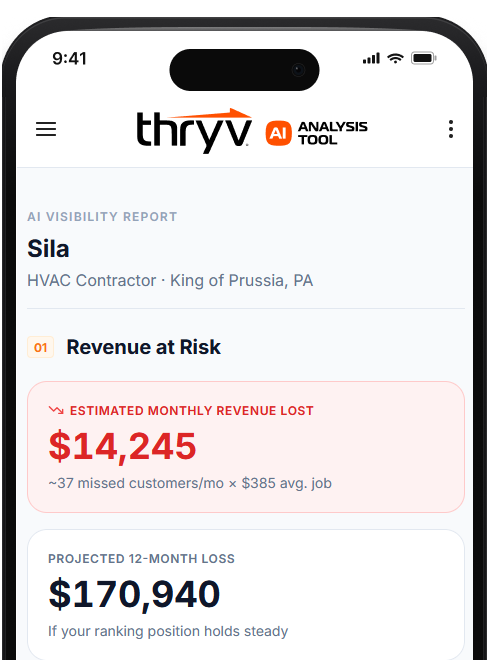
See how your business stacks up against competitors
Get a free AI-powered report showing where you rank online and what to fix first.
1. Make Your Business Information Consistent Everywhere
Imagine finding a business online with three different phone numbers, two different addresses and conflicting business hours.
Would you trust that information?
Neither should your customers.
One of the most practical steps in AI search optimization for local businesses is making sure your core business information is accurate wherever it appears.
Start with:
- Business name
- Address or service area
- Phone number
- Website
- Hours
- Services
- Business categories
- Locations served
Check your website, Google Business Profile, online directories, social profiles and other relevant listings.
This isn’t just an AI search tactic. Accurate business information has always been fundamental to local search.
The difference is that AI-powered discovery can make consistency even more important because customers may receive an answer based on information pulled from multiple sources.
If your website says you serve three cities, but your listings say you serve one, you’re creating unnecessary confusion.
Expert Tip
Your first priority: make sure the internet tells one consistent story about your business.
2. Make Your Website Easy to Understand
Once your business information is accurate, make sure your website clearly explains what you actually do.
Your homepage should not be the only place where customers can learn about your services.
Create clear, useful pages that explain:
- What services you offer
- Who you serve
- Where you provide services
- What makes your business different
- What customers can expect
- Common questions about your services
- How customers can contact or book you
For example, a roofing company shouldn’t rely on a single “Services” page.
Separate pages for roof repair, roof replacement, commercial roofing and storm damage can give customers more useful information and make the business’s expertise clearer.
This is simply good SEO for small businesses.
It can also help AI search experiences better understand the specific services your business provides.
The same principle applies to local intent. If customers search for “roof repair in Nashville,” your website should make it obvious that you provide roof repair and serve Nashville.
And don’t forget the questions customers ask before they hire you.
Answering questions about pricing, timelines, service areas, preparation and what to expect can make your website more useful while giving search engines additional context.
Expert Tip
Your second priority: make your website the clearest source of truth about your business.
3. Turn Customer Reviews into Proof of Your Reputation
Your business can say it’s reliable, experienced, or customer-focused.
Your customers can say it, too.
Reviews provide firsthand feedback about what customers experienced when they worked with your business. They can also reinforce the services, locations and qualities your business is known for.
For example, an HVAC company may advertise emergency repairs. If customers consistently mention the company’s quick response and successful emergency service in their reviews, that provides additional context about the business.
Make review generation part of your ongoing marketing process.
Ask satisfied customers for honest feedback. Make the process easy. Respond professionally to both positive and negative reviews.
Don’t try to manufacture reviews or force customers to use specific keywords. Authentic feedback is more valuable than a collection of unnatural phrases.
Customer reviews can influence both credibility and visibility, and current small-business guidance recommends actively encouraging satisfied customers to leave reviews.
You can make requesting feedback easier with a Google review link generator.
For businesses managing reviews across multiple platforms, reputation management software for small businesses can help keep the process organized.
Expert Tip
Your third priority: build the reputation you want customers and search systems to understand.
4. Show Your Expertise with Helpful Content
Customers don’t only search for businesses. They search for answers.
“Why is my AC blowing warm air?”
“How much does it cost to replace a roof?”
“What should I bring to my first tax appointment?”
“Should I repair or replace my water heater?”
These questions represent opportunities to demonstrate what your business knows.
Create content around the questions your customers ask before, during, and after they hire you.
Depending on your industry, that might include:
- FAQs
- How-to guides
- Service explanations
- Maintenance tips
- Cost and pricing information
- Comparisons
- Troubleshooting advice
- Case studies
- Before-and-after examples
The goal isn’t to create hundreds of articles simply because someone says AI search likes content.
Create useful content because it demonstrates real expertise.
Google’s current AI search guidance emphasizes creating unique, valuable content and notes that standard SEO practices remain relevant to generative AI features.
That means the best approach isn’t to chase every new AI acronym or optimization trick. It’s to create information that genuinely helps your customers.
Expert Tip
Your fourth priority: turn your expertise into information customers can find and use.
5. Strengthen Your Presence Beyond Your Website
Your website is important, but it isn’t your entire online presence.
Customers can discover your business through listings, review sites, social media, industry directories, local publications, and other websites.
That creates a broader question:
What does the internet say about your business when your website isn’t the only source?
Review your presence across the places that matter to your customers.
Look for:
- Relevant business directories
- Industry-specific listings
- Local organizations
- Social profiles
- Review platforms
- Third-party mentions
- Community websites
- Local media
You don’t need to be everywhere.
Focus on the sources that are relevant to your industry, location, and customers. Make sure the information is accurate and consistent wherever you appear.
This is where AI search visibility for local businesses becomes less about one website and more about your overall digital footprint.
Think of it this way:
Your website tells customers what you say about your business. Your broader online presence helps reinforce whether that story is consistent elsewhere.
Current small-business guidance similarly recommends keeping information consistent across websites, Google Business Profile, map listings and online directories.
Expert Tip
Your fifth priority: make your business recognizable and credible beyond your own website.
From Hard to Find to Page 1
See how K&L Roofing strengthened its local visibility with Thryv.
What NOT to Do for AI Search Optimization
When a new type of search emerges, it’s easy to look for a shortcut.
Be skeptical of anyone promising one.
Myth: There’s a secret AI ranking trick
There isn’t a guaranteed formula for getting your business recommended by ChatGPT, Gemini or another AI search experience.
Instead, build the fundamentals that make your business easier to understand and trust.
Myth: You need to stuff your content with AI keywords
Repeating “best plumber in [city]” dozens of times won’t make your content more useful.
Use relevant terms naturally while clearly explaining your services, expertise, and service area.
Myth: AI search replaces local SEO
It doesn’t.
Google explicitly says its generative AI Search features are built on its core Search ranking and quality systems.
Your local SEO foundation still matters.
Myth: You need an llms.txt file to appear in AI search
Don’t spend your time chasing technical requirements that aren’t supported by the search engines you’re trying to reach. Google clarified in 2026 that llms.txt isn’t needed for Google Search and won’t positively or negatively affect Search visibility or rankings.
Myth: One AI response tells you where you rank
AI responses can change based on the platform, location, prompt, and available information.
Test multiple questions over time instead of treating one answer as a permanent ranking.

Small Business SEO & AEO Visibility Checklist
Optimize your business for search engines, AI answers, and zero-click discovery. Use this step-by-step checklist to improve visibility, strengthen trust signals, and turn online searches into real customer inquiries.
Download the Checklist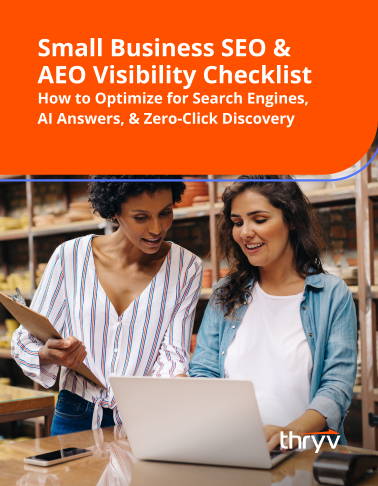
How AI Search Optimization Differs by Local Business Industry
The core principles of local AI search optimization remain the same across industries: accurate information, useful content, strong reviews and credible online signals.
But what customers want to know can vary.
Home Services
Plumbers, electricians, roofers, HVAC companies and contractors should clearly communicate service areas, specific services, experience and customer results. Service-specific pages and project examples can help demonstrate expertise.
Professional Services
Law firms, accountants, and consultants should clearly explain areas of expertise, the types of customers they serve, and the problems they solve. Helpful educational content can also answer questions customers have before booking a consultation.
Personal Care & Wellness
Salons, spas and wellness businesses should make services, locations, hours and booking information easy to find. Reviews and up-to-date social content can also help customers evaluate their options.
Automotive Services
Auto repair shops and other automotive businesses can highlight specific services, vehicle expertise, service areas, and customer experiences.
The takeaway isn’t that every industry needs a completely different AI strategy.
It’s that the more clearly you communicate your specific expertise, the easier it is for customers and search systems to understand what makes your business relevant.
How Thryv Helps Local Businesses Strengthen Their Online Visibility
AI search optimization isn’t a one-time task.
Business information changes. Customers leave new reviews. Services evolve. Websites need updates. Social profiles need attention.
Keeping all of that consistent can be a lot for a small business owner to manage.
Thryv® brings many of those visibility activities together so you can spend less time managing your digital presence and more time running your business.
Keep Your Business Listings Accurate
Thryv helps businesses manage their online listings so important business information can stay consistent across relevant directories and platforms.
Build and Manage Your Online Reputation
Make it easier to request customer reviews, monitor your reputation, and stay on top of customer feedback.
Strengthen Your Website and Online Presence
Your website is a central part of your digital footprint. Thryv provides tools to help small businesses build and maintain a professional online presence.
Stay Visible Across More Channels
Your customers don’t necessarily follow a straight path from Google to your website to a purchase.
They may see a social post, check reviews, visit your website, and ask an AI tool before contacting you.
Thryv helps bring those visibility and marketing activities together so you can maintain a more consistent presence.
Get Found Across Local and AI Search
Strengthen your visibility across search engines and AI-powered results.
Your Local AI Search Optimization Checklist
Use this checklist to turn the strategy into action.
- Test at least 3–5 non-branded AI search questions related to your business.
- Check whether your business name, address, phone number and hours are accurate online.
- Review your Google Business Profile and major business listings.
- Make sure your website clearly explains your services and service area.
- Create or update pages for your most important services.
- Answer common customer questions on your website.
- Ask satisfied customers for authentic reviews.
- Respond to reviews professionally and consistently.
- Review your social profiles for outdated information.
- Identify relevant directories and third-party websites where your business should appear.
- Look for inconsistencies in how your business is described online.
- Re-test AI search visibility periodically.
- Prioritize accuracy and useful information over AI search “hacks.”
Get Your Business Ready for the Next Generation of Local Search
Go back to that customer looking for a plumber.
They still need a business they can trust.
But they may no longer start by typing a few keywords into Google and choosing a list of links.
They might ask:
“Who are the best plumbers near me?”
Or:
“Which plumber in my area has the best reviews?”
Or:
“Who specializes in emergency plumbing?”
The question has changed. Your opportunity hasn’t.
Customers still need local businesses with the right services, a strong reputation, and expertise to solve their problems.
AI search optimization doesn’t require you to start over.
It requires you to make the business you’ve already built easier to understand wherever customers search.
Keep your information accurate.
Make your website useful.
Build an authentic reputation.
Show your expertise.
And maintain a consistent presence across the web.
That’s how you build AI search visibility for local businesses while strengthening the local SEO foundation that supports it.
Help More Customers Find Your Business
Thryv helps small businesses stay visible wherever customers search — from Google to AI.
FAQs About AI Search Optimization for Local Businesses
A: There is no guaranteed way to make an AI system recommend your business. Start with a strong online presence that includes accurate business listings, useful website content, authentic customer reviews, and consistent information across trusted sources.
A: AI search optimization builds on local SEO rather than replacing it. Traditional SEO and local visibility fundamentals remain relevant to Google’s generative AI search features, while your broader online presence can help provide additional context for AI-powered discovery.
A: Your Google Business Profile is an important source of local business information, and Google recommends keeping your business information up to date. However, AI-powered search experiences can use information from multiple sources, so maintaining consistency across your broader online presence is important.
A: Reviews can provide valuable context about customer experiences and your business reputation. They don’t guarantee that your business will appear in an AI-generated response, but authentic reviews can strengthen the credibility and visibility of your overall online presence.
A: GEO, or Generative Engine Optimization, generally refers to optimizing content and online information for AI-generated search experiences. For local businesses, GEO overlaps with local SEO and focuses on making your business, expertise and information easier for AI-powered search experiences to understand.