8 Ways AI-Powered Platform Services Help Businesses
Try Thryv for FreeBy Allison Sakounthong, Small Business Expert
Updated October 14, 2026 · 17 min read
Key Takeaways
- Save time: AI can automate repetitive marketing, communication, and administrative tasks.
- Prioritize opportunities: AI can help businesses identify promising leads and determine where to focus on follow-up.
- Build a stronger presence: Connected tools can simplify online listings, content, and reputation management.
- Make smarter decisions: AI can turn business data into insights that help guide your next move.
- Simplify your tech stack: An integrated AI-powered platform can reduce the need to manage multiple disconnected tools.
- Keep humans in control: The best AI solutions support your expertise rather than replace it.
AI has moved from something businesses experimented with to something they increasingly expect to use every day.
For small businesses especially, AI can help take repetitive work off your plate, surface useful insights, and make it easier to keep up with customer expectations. But there’s a catch: adding a different AI tool for every task can quickly create another problem to manage.
That’s where AI-powered platform services come in.
Instead of using disconnected tools for marketing, lead management, customer communication, reporting, and automation, an AI-powered business platform can bring these capabilities together. The goal isn’t to replace the work that makes your business unique. It’s to make the work around it easier, faster, and more manageable.
And small businesses are already seeing the value.
According to the 2026 AI and Small Business Adoption Survey, 66% of small businesses now report using AI, up from 55% a year earlier. Even more telling, 70% say AI has contributed to increased revenue, while 92% of AI users say it saves them time.
So, what can an AI-powered platform actually do for your business?
Here are eight ways it can help.
8 Ways AI-Powered Platform Services Help Businesses
1. Automate Repetitive Marketing Tasks
Marketing works best when it happens consistently. But consistency is difficult when you’re also answering customers, managing employees, delivering services and handling everything else that comes with running a business.
AI-powered platform services can automate repetitive marketing activities so you don’t have to start from scratch every time.
Think scheduled campaigns, customer follow-ups, social content and other recurring tasks that can keep working in the background.
The benefit isn’t simply doing less work. It’s creating more time for the work that requires your attention.
A smarter approach to marketing
Look for AI tools that combine automation with your existing marketing activities. The fewer disconnected systems you have to manage, the easier it is to keep your marketing moving.
2. Capture and Prioritize Better Leads
More leads don’t necessarily mean more business.
If you’re sorting through inquiries manually, it’s easy to spend valuable time on low-intent prospects while a high-quality opportunity waits for a response.
AI can help businesses analyze available lead information, identify patterns, and prioritize opportunities based on signals that indicate potential interest.
That means your team can spend more time following up with the people most likely to become customers.
And speed matters. AI isn’t just about determining which leads deserve attention. It can also help businesses reduce the manual steps between receiving an inquiry and taking action.
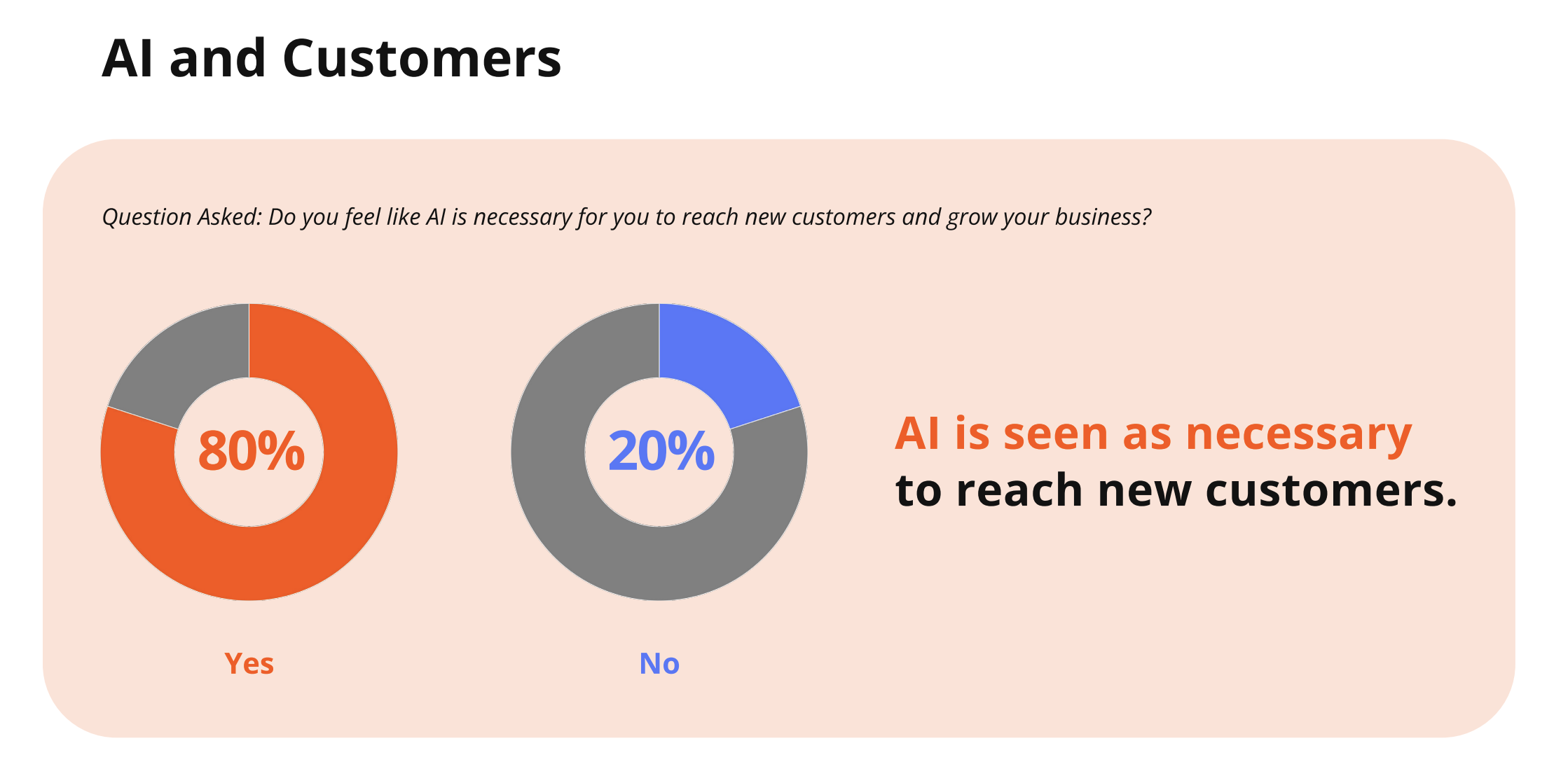
80% of small business AI users said AI was essential to reaching new customers in Thryv’s 2025 survey.
Turn lead data into next steps
The most useful AI tools don’t just organize information. They help turn that information into an action you can take.
3. Strengthen Your Online Presence
Customers have more ways than ever to discover a business.
They may find you through a search engine, map listing, social media profile, review site, or an AI-powered search experience. That makes an accurate and consistent online presence more important than ever.
AI-powered platform services can simplify the work of managing that presence.
That can include keeping business information organized, supporting local search visibility, and helping businesses create content that keeps their digital presence active.
The goal isn’t to be everywhere just for the sake of being everywhere. It’s to make sure customers can find accurate information about your business wherever they’re looking.
The U.S. Census Bureau found that overall business AI use hovered around 17% to 20% between December 2025 and May 2026, while adoption was considerably higher among larger firms.
Make your business easier to find
An AI-powered platform can reduce the amount of manual work involved in managing your digital presence, giving you more time to focus on serving customers.
4. Respond to Customers Faster
Customers don’t always reach out during convenient business hours.
They may send a message while you’re on a job, ask a question after you’ve closed for the day, or submit an inquiry while you’re already helping someone else.
AI and automation can help businesses stay responsive without requiring someone to manually handle every interaction.
That could mean helping draft responses, answering common questions, or triggering follow-up communications based on customer activity.
The objective isn’t to make every customer interaction automated. It’s to make sure automation handles the predictable work while your team focuses on conversations that need a human touch.
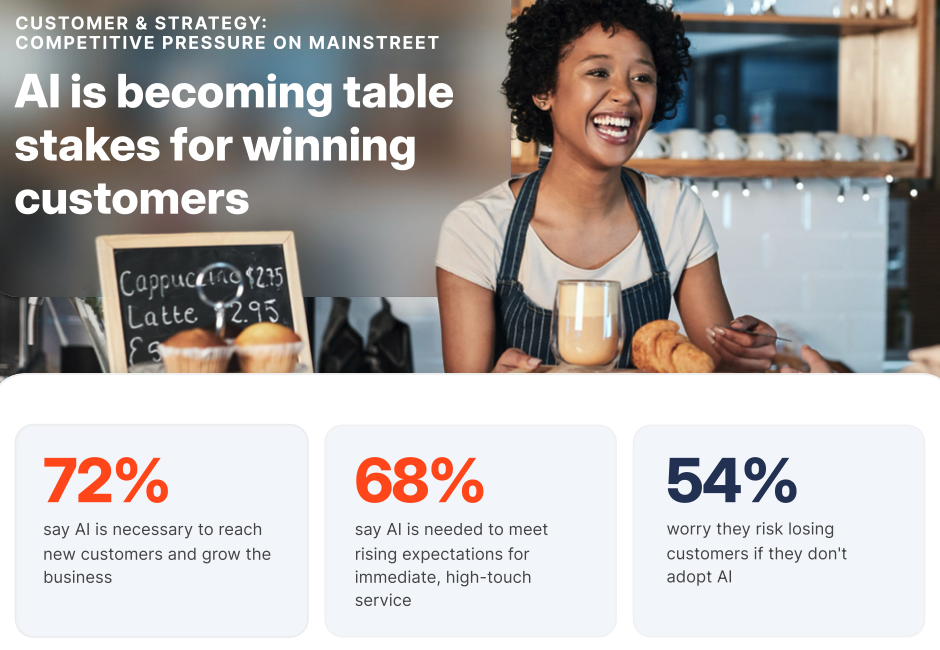
In Thryv’s 2026 small business survey, 68% of respondents said AI was necessary to meet rising consumer expectations for speed and personalization.
Give customers fewer reasons to wait
Fast responses can make a difference when customers are comparing businesses. AI can help you stay responsive without adding another task to an already full day.
5. Create Marketing Content More Efficiently
You don’t need a full marketing department to benefit from AI.
AI can help generate social media ideas, draft marketing copy, brainstorm campaigns, and create first drafts of customer communications.
That doesn’t mean everything should be published exactly as AI generates it. Your expertise, personality, and understanding of your customers still matter.
Instead, think of AI as a starting point.
It can get you past the blank page so you can spend your time improving the message rather than staring at a blinking cursor.
Content generation is already one of the most common ways businesses use AI. In Thryv’s 2025 survey, 55% of AI-using small businesses reported using AI for content generation.
Keep the human part of your marketing
The best AI-assisted content still sounds like the business behind it. Use AI to accelerate creation, then add your experience, point of view, and brand personality.
6. Turn Business Data Into Actionable Insights
Businesses generate a lot of information.
Leads. Customer interactions. Marketing performance. Reviews. Website activity. Campaign results.
The challenge isn’t necessarily collecting data. It’s figuring out what the data is telling you.
AI can help identify patterns, summarize information, and surface insights that might otherwise take hours to find manually.
That can make reporting more useful because you’re not just looking backward at what happened. You’re getting a clearer picture of where you may want to focus next.
From reporting to decision-making
A good AI-powered platform should make business information easier to understand, not simply give you more dashboards to check.
7. Manage Reviews and Your Online Reputation
Reviews can influence whether a potential customer decides to contact your business. They also give you valuable insight into what customers appreciate and where there may be room to improve.
The problem? Keeping up with reviews across multiple platforms can take time.
AI can help businesses respond more efficiently by generating thoughtful response drafts based on the review. That gives business owners a starting point while leaving the final word in human hands.
This can be especially useful when you’re dealing with a steady stream of reviews and don’t want any customer feedback to go unanswered.
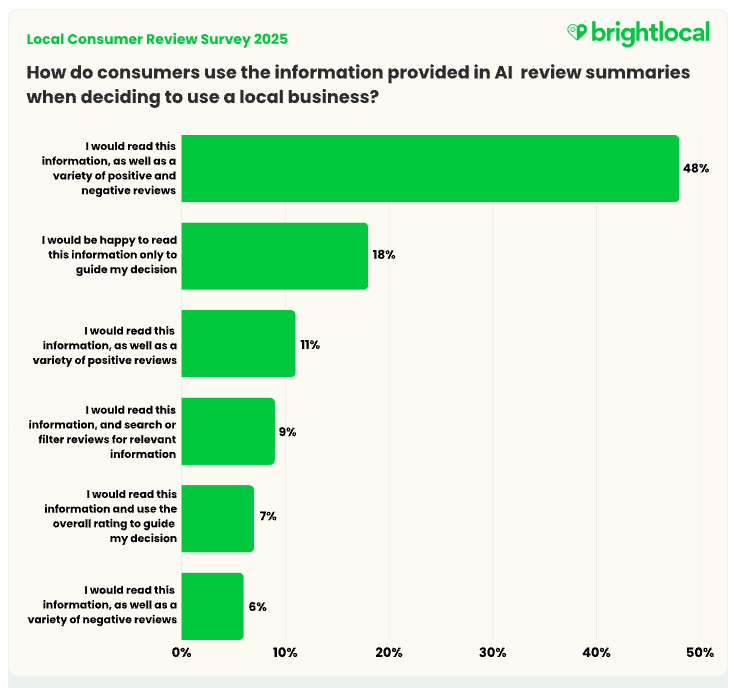
Consumers are also becoming more comfortable using AI as part of their review research. BrightLocal’s 2025 Local Consumer Review Survey found that consumers were using AI-generated review summaries to help guide purchasing decisions.
Don’t treat reviews as a box to check
A review response is another opportunity to show potential customers how you communicate, solve problems and appreciate your customers.
8. Bring Your Growth Tools Together
Here’s where an AI-powered platform can become more useful than a collection of individual AI tools.
One tool writes content. Another manages leads. Another handles reviews. Another provides analytics. Another automates communication.
Before long, you’re spending more time managing your technology than using it.
A connected platform can bring these capabilities together so information and workflows don’t have to live in separate places.
That matters because AI is becoming part of more areas of the business at the same time.
The 2026 AI and Small Business Adoption Survey found that 81% of small business owners say AI has made them more strategic in how they run their business.
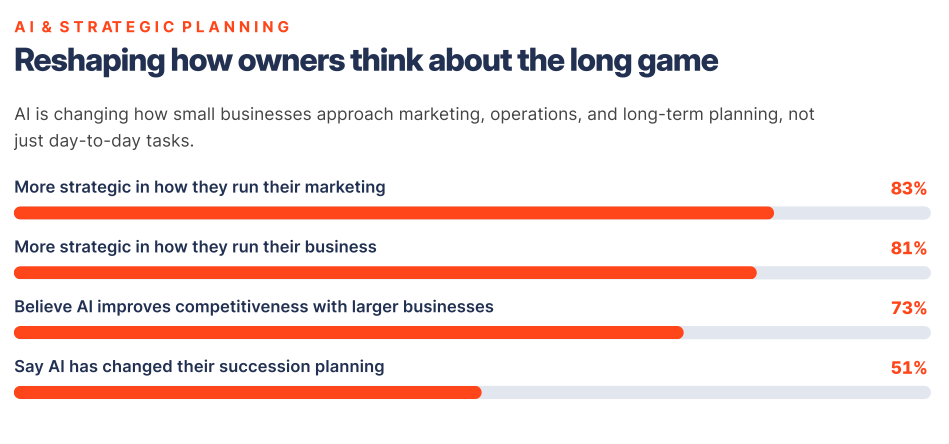
Less tool juggling. More business building.
The value of an AI-powered platform isn’t simply the number of AI features it offers. It’s how well those features work together to support the way you actually run your business.
What to Look for in an AI-Powered Platform
Not every AI tool is created with small businesses in mind. Before adding another solution to your technology stack, consider whether it can actually simplify your workflow.
Look for a platform that offers:
- Connected tools: Marketing, lead management, communication, reporting and automation should work together.
- Practical AI: Look for features that solve real business problems, not AI capabilities added just for the sake of having them.
- Automation: The platform should help reduce repetitive work rather than create more tasks.
- Actionable insights: Data should help you make decisions, not just fill another dashboard.
- Human control: AI should assist your expertise, not remove your ability to review and personalize the outcome.
- Room to grow: Choose technology that can support your business as your needs become more complex.
There’s also a learning curve to consider. While AI adoption is rising quickly, 70% of small business owners surveyed in 2026 said they need more training to use AI effectively.
That makes ease of use just as important as the number of features.

How to Jump-Start Small Business Growth with AI
Free Guide
How to Jump-Start Small Business Growth with AI
Discover how to use AI to make smarter decisions, streamline your marketing, and grow more efficiently — without adding complexity. This practical guide breaks down what AI really means for your business and shows you how to apply it to improve customer engagement, uncover insights, and scale with confidence.
Make AI Work Harder for Your Business
AI doesn’t have to mean adding another dozen tools to your business.
The bigger opportunity is using AI where it can actually make running your business easier.
From automating repetitive marketing tasks and prioritizing leads to managing your online presence, responding to customers and turning data into useful insights, AI-powered platform services can help small businesses accomplish more without adding more complexity.
And as AI adoption continues to grow, the question is becoming less about whether businesses should use AI and more about how they can use it effectively.
The right platform can help make that answer a little simpler.
Try the New Thryv Experience
See what’s new — and why it gives your business an edge.