Simplifying your business.

 One software for all of your locations.

 Earn cash by referring businesses to us.



Every new year brings fresh motivation to improve how your business shows up online. But as we move into 2026, the biggest opportunity for growth isn’t adding more marketing tactics — it’s letting go of outdated SEO habits that no longer work.
Search engines have evolved. Customer behavior has changed. And yet many small businesses are still making the same small business SEO mistakes that quietly limit visibility, traffic, and leads.Think of this as your SEO reset. Here are five common SEO pitfalls to leave behind in 2025 — and what to do instead if you want to stay competitive in 2026.
Market and Grow Your Business More Effectively With Marketing Center
Marketing Center helps you attract new customers to your business and shows you which marketing strategies work best for your customers so you don’t waste time and money on the wrong tactics.

Resolution #1: Stop Keyword Stuffing and Start Optimizing With Intent
Once upon a time, stuffing your website with keywords worked. Today, it does the opposite.
Search engines are smarter. Overusing keywords signals low-quality content and can hurt rankings. This remains one of the most damaging on-page SEO mistakes small businesses make.
Leave behind in 2025:
- Repeating the same keyword unnaturally
- Writing for algorithms instead of people
- Ignoring user experience
Adopt in 2026:
Modern SEO focuses on relevance and clarity. Use keywords strategically, but prioritize helpful content that answers real customer questions. The best SEO best practices for small businesses balance optimization with readability.
Resolution #2: Stop Ignoring Local SEO Opportunities
If your business serves a specific area, local visibility is non-negotiable. Yet many businesses still treat local SEO as optional, missing out on high-intent traffic.
Neglecting local SEO for small businesses means your competitors appear in map results, local listings, and “near me” searches instead of you.
Leave behind in 2025:
- Incomplete or outdated listings
- Inconsistent business information
- Ignoring reviews and local signals
Adopt in 2026:
Optimize your Google Business Profile, ensure accurate contact details, and actively manage reviews. Strong local optimization is a core component of modern SEO services and one of the fastest ways to improve visibility.
Resolution #3: Stop Overlooking Mobile Optimization
Mobile optimization is no longer a “nice to have.” It’s a ranking requirement.
If your website isn’t fast, responsive, and easy to use on mobile devices, you’re likely losing both rankings and customers. Ignoring mobile optimization hurts search ranking — and it hurts conversions too.
Leave behind in 2025:
- Slow-loading pages
- Hard-to-read text on phones
- Clicks that don’t work on mobile
Adopt in 2026:
A mobile-friendly website improves user experience and supports better rankings. Mobile optimization for SEO ensures customers can find and contact you easily — no matter where they are.
Resolution #4: Stop Letting Outdated and Thin Content Hold You Back
Your website content is often the first impression customers get. When that content is outdated, duplicated, or too thin, search engines — and users — take notice.
Outdated content and thin pages limit visibility and make it harder to rank for competitive searches.
Leave behind in 2025:
- Blog posts from years ago that no longer reflect your services
- Short pages with little value
- Duplicate content across multiple pages
Adopt in 2026:
Regular updates and deeper content help improve authority. Refresh service pages, expand FAQs, and update older posts. Addressing thin content SEO issues is one of the easiest ways to strengthen your site without starting from scratch.
Resolution #5: Stop Guessing and Start Tracking SEO Performance
SEO isn’t just about rankings — it’s about results. When businesses don’t track performance, they miss valuable insights into what’s working and what’s not.
Not tracking analytics leads to missed opportunities, wasted time, and stalled growth.
Leave behind in 2025:
- Making SEO changes without measuring impact
- Ignoring traffic and engagement data
- Focusing only on vanity metrics
Adopt in 2026:
Use SEO analytics for small businesses to monitor visibility, website traffic, and conversions. Tracking SEO performance allows you to refine your strategy and invest in what actually drives growth.
Make 2026 the Year Your SEO Strategy Works Smarter
Leaving these SEO mistakes to avoid in 2025 behind doesn’t require more effort, it requires a smarter approach. Today’s SEO success is built on clarity, consistency, and data-driven decisions.
With the right tools and SEO services for small businesses, you can future-proof your strategy, improve search visibility, and stay competitive in 2026 and beyond.
This year, make a resolution that pays off all year long: stop repeating the past and start building an SEO strategy designed for how customers — and search engines — work today.

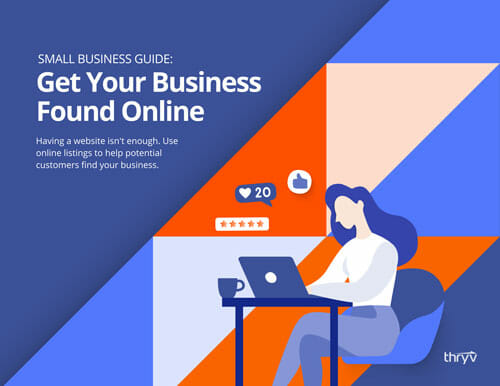
Free Guide: Online Listings Guide – Get Your Business Found Online
Showing up prominently in online searches is a great way to attract new customers to your business. In this free ebook, we’ll show you how to manage and optimize your online listings.
Download
FAQ
Q: What are the most common small business SEO mistakes?
A: Small business SEO mistakes include keyword stuffing, ignoring local SEO, neglecting mobile optimization, publishing thin or outdated content, and failing to track SEO performance with analytics tools.
Q: Why is local SEO important for small businesses?
A: Local SEO helps small businesses appear in map results and local searches, making it easier for nearby customers to find, contact, and trust their business—especially through an optimized Google Business Profile.
Q: How does mobile optimization affect SEO rankings?
A: Mobile optimization affects SEO rankings because search engines prioritize mobile-friendly websites. Slow load times, poor design, or broken mobile functionality can negatively impact both visibility and user experience.
Q: How often should small businesses update website content for SEO?
A: Small businesses should review and update website content at least every 6–12 months to ensure accuracy, improve relevance, and prevent outdated or thin content from limiting search visibility.
Q: How can small businesses track SEO performance effectively?
A: Small businesses can track SEO performance by using analytics tools to monitor website traffic, keyword rankings, engagement, and conversions, helping them identify opportunities for improvement and growth.
Get Your Business
Found Online
Are you ready to get serious about your online listings?