Key Takeaways
- TikTok and Instagram are becoming important local discovery tools as consumers increasingly use social media to search for businesses, services, and recommendations.
- Using relevant service keywords, location terms, and customer questions in social content can help improve local visibility.
- Reviews, comments, customer videos, and other forms of social proof can influence which local businesses consumers choose.
- A strong local presence requires consistent, accurate business information across social media, search engines, websites, and online listings.
Finding a local business used to mean opening Google and typing in something like “best coffee shop near me” or “plumber in my area.” That’s still happening, but it’s no longer the only place people are searching. Increasingly, consumers are turning to social platforms like TikTok and Instagram to find everything from restaurants and salons to home service providers.
For small businesses, that shift changes what it means to improve local visibility. Showing up in traditional search results still matters, but your social content is becoming part of the search experience, too. Captions, keywords, customer comments, videos, and even the questions you answer can all help potential customers discover your business.
1. Consumers are using social platforms like search engines.
Social media isn’t just where customers go to scroll anymore. Platforms like TikTok and Instagram are increasingly being used to actively search for recommendations, businesses, products, and services.
For local businesses, this creates another opportunity to get discovered. Someone looking for a new restaurant might search “best brunch in Austin,” while a homeowner could look for videos about landscapers, painters, or contractors in their area. These searches often give customers something traditional results can’t – an immediate look at the business, its work, and what other customers think.
To improve local visibility, think about what your customers might actually type into the search bar and create social content that answers those searches.
2. Captions and keywords now impact visibility.
Keywords aren’t just for your website anymore. The words you use in captions, video descriptions, profile information, and other social content can help platforms understand what your business does and when your content might be relevant to a search.
Instead of a generic caption like “Another great job today!,” a local roofing company could write, “Another roof replacement completed in Tampa.” That gives both potential customers and the platform useful context about the service and location.
Look for natural opportunities to include your location, services, specialties, and the questions customers commonly ask. The goal isn’t to stuff every post with keywords. It’s to make it immediately clear what your content is about and who it’s for.
3. Social proof influences local buying decisions.
Finding your business is only the beginning. Customers also want reassurance that choosing you is a good decision, and social media can provide plenty of it. Reviews, comments, before-and-after videos, customer testimonials, and user-generated content all give potential customers a glimpse of what working with your business is actually like. A polished website can tell someone you provide a great service, but seeing real customers talk about their experiences can make that claim much more convincing.
Encourage satisfied customers to leave reviews, tag your business, or share their experiences. Then, respond to comments and reviews so potential customers can see that there are real people behind the business.

Free Guide: The Three Essentials of Modern Marketing
Build a smarter marketing system that helps your business get found online, generate more qualified leads, and create better visibility into your leads. Learn the three core strategies modern small businesses need to simplify marketing, improve results, and drive sustainable growth with AI-powered tools.
DOWNLOAD
4. Location-specific content helps businesses surface in local searches.
If you want to reach local customers, give social platforms clear signals about where your business operates. That can include mentioning your city, neighborhood, service area, or recognizable local landmarks when they’re relevant to the content.
A bakery could post about preparing for a local festival, for example, while a landscaper might showcase a project completed in a specific neighborhood. This makes content more useful to nearby customers while reinforcing the connection between your business and its location. You don’t need to force a city name into every post. Focus on creating content that genuinely reflects the community you serve.
5. Helpful content can capture customers before they’re ready to buy.
Not every customer starts their search with “I need to hire someone today.” Many begin with a question. A plumber might create a video explaining why a faucet keeps dripping. A hairstylist could demonstrate how to maintain a new color. A restaurant might show what goes into one of its most popular dishes.
This type of content gives your business a chance to appear while customers are still researching their options. More importantly, answering useful questions demonstrates expertise before you ever ask someone to make a purchase. Start with the questions you already hear from customers. If people regularly ask about pricing, maintenance, timelines, or how a service works, there’s a good chance other potential customers are searching for the same information.
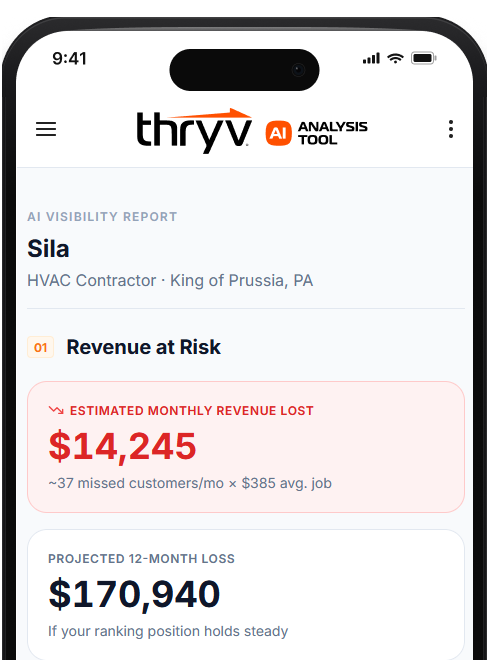
See how your business stacks up against competitors
Get a free AI-powered report showing where you rank online and what to fix first.
6. Consistent business information strengthens visibility across channels.
Customers may discover you on TikTok and then check Google, your website, or another social profile before deciding to contact you. If they encounter different hours, phone numbers, addresses, or service information along the way, that creates unnecessary friction.
Make sure essential business details are accurate and consistent wherever your business appears online. That includes your website, social profiles, business listings, and online directories.
Managing those details from one place can make consistency much easier. With Thryv’s local listings management tools, small businesses can keep important information accurate across major online destinations without manually updating every listing individually.
7. Engagement can extend the reach of local content.
Social search isn’t only about what you put in a caption. How people respond to your content matters, too. Comments, shares, saves, and other interactions can help platforms recognize content that audiences find useful or relevant. For a local business, that means a helpful answer or an interesting video can reach people beyond your existing followers.
Give customers a reason to interact. Ask questions, respond to comments, share useful advice, and create content worth saving for later. Even better, pay attention to what generates engagement and use those insights to guide future posts.
8. Social visibility now works alongside traditional local SEO.
TikTok and Instagram aren’t replacing Google, business listings, or your website. Instead, they’re adding more places where the customer journey can begin. Someone might first discover your business through an Instagram Reel, read your Google reviews, visit your website, and then return to social media before finally making an appointment. If your business is difficult to find or inconsistent at any point in that process, you risk losing that customer along the way.
That’s why efforts to improve local visibility should extend beyond any single platform. An accurate website, optimized local listings, active social presence, and strong reputation all reinforce one another, helping customers find and trust your business no matter where their search starts.
Turn Social Search Into Local Visibility
Local search is no longer limited to Google. Customers are discovering businesses across TikTok, Instagram, search engines, maps, directories, and review sites, often checking several of these places before deciding where to spend their money.
For small businesses, the goal isn’t to choose between social media and traditional local SEO. It’s to make sure your business is easy to find and trustworthy wherever customers are searching. Creating useful social content, using relevant local keywords, encouraging customer engagement, and keeping your business information consistent can all help improve local visibility.
Thryv makes it easier to manage that growing digital presence from one place, helping small businesses stay visible, consistent, and connected with customers across the channels that matter.
See the Unified Platform 100,000+ Businesses Trust
Manage your growth with Thryv’s unified platform, or get hands-on marketing help with Thryv Boosts™. Choose the approach that fits your time, goals, and business.
FAQs About Social Media and Local Search
A: Social media can improve local visibility by helping your business appear when people search for local products, services, and recommendations. Using relevant keywords, location information, and helpful content makes it easier for platforms and potential customers to understand what your business offers and where you operate.
A: TikTok is increasingly used like a search engine, particularly for recommendations, how-to content, products, restaurants, and local businesses. That makes searchable, keyword-focused content increasingly valuable for businesses that want to reach customers beyond traditional search engines.
A: Include your location and relevant service keywords naturally in captions, descriptions, and profile information. You can also create posts that answer common customer questions and feature local places, events, projects, or topics relevant to your community.
A: No. Social media adds another way for customers to discover your business, but websites, business listings, reviews, and traditional search engines still play an important role in local visibility. The strongest approach is to maintain a consistent presence across all the places your customers search.